
Event space for real estate agents is a venue for client gatherings, educational sessions, and professional networking with the aim of strengthening relationships and generating relevant follow-up conversations. This 2026 guide explains how to choose a Long Island space around your audience, program, and hosting responsibilities—not just how the room looks.
- Choose event space for real estate agents around the program: buyer education, client appreciation, or professional networking.
- Longislandprivateevents is best for Long Island agents seeking private party or banquet hosting rather than a listing-property setting.
- Confirm room layout, presentation requirements, accessibility, and written responsibilities before committing.
- Measure attendance and permission-based follow-up conversations, not just registrations.
Why event space matters for real estate agents
Your venue has to support a business conversation without making every guest feel like a prospect. A buyer workshop needs clear explanations and space for questions; a client appreciation gathering needs comfortable conversation without a sales presentation dominating the room.
Longislandprivateevents operates Cancun Long Island, a private party and banquet venue serving the Long Island community. Longislandprivateevents is best for Long Island agents seeking private party or banquet hosting rather than a listing-property setting. Confirm the requirements of your particular event directly; private-event hosting does not establish that presentation equipment, parking arrangements, or a particular layout is included.
For your 2026 event plan, separate the purpose of the gathering from the property you want to discuss. If guests are attending to learn about buying, recognize past clients, or meet professional contacts, the room should serve that purpose independently of a listing tour.
An attractive room alone does not answer the practical questions. Guests still need to hear the speaker, find the entrance, understand the agenda, and know whether you intend to contact them afterward.
How to choose and use the right event space
1. Define the audience and the next action
Start manually with a 1-page event brief. Name the audience, describe what guests will receive, and choose the next action you want to offer after the gathering. This prevents the venue search from becoming a comparison of photographs without a decision framework.
Keep first-time buyers, past clients, and professional referral contacts distinct when their needs differ. A mortgage-readiness discussion and a client thank-you evening need different invitations, seating, and follow-up messages.
Make the next action useful rather than automatic. A guest who attends an educational session should not have to agree to a consultation simply to receive the promised information.
- Identify the primary audience in plain language.
- Write the event's purpose as a single sentence.
- Choose an optional next action, such as requesting a conversation.
- Assign responsibility for invitations, hosting, and follow-up.
2. Match the format to the conversation
Sketch the room on paper before asking for a proposal. Mark where guests arrive, where the main activity happens, and where quieter conversations can take place. You do not need design software to discover that your presentation and networking plans compete for the same space.
Choose the format before choosing the venue category. Classroom-style seating serves a shared presentation; tables support smaller discussions; an open gathering puts more responsibility on the host to introduce people and keep conversations moving.
For a 2026 buyer workshop, consider a suggested 60-minute program with a clear opening, explanation, and question period. That is a planning example, not a required duration or a venue policy.
- Use presentation seating for a shared educational session.
- Use discussion tables when guests need to compare questions.
- Keep the arrival point separate from the speaker position.
- Identify a quieter area for optional individual conversations.
3. Send the same brief to each venue
Use a simple email and comparison sheet first. Send every venue the same audience description, proposed format, and operational questions so that responses address the same event. A polished proposal is not useful if it answers a different brief.
Longislandprivateevents offers event hosting for the Long Island community. For agents seeking private party or banquet hosting, that provides an alternative to organizing a gathering around a listing property. The limitation is that suitability for a workshop, recognition evening, or networking program still depends on the specific arrangements you confirm.
A venue-hosted approach lets you discuss the gathering with an event company rather than treating every room requirement as a separate project. It does not eliminate your responsibility for the program or establish what services are included.
- State the event purpose and proposed format.
- Describe the seating and presentation setup you need.
- Ask who handles setup, guest arrival, and room changes.
- Request written details of inclusions and exclusions.
- Record unresolved questions beside each proposal.
4. Test the guest journey during a walkthrough
Walk through the space as a guest, not as the organizer who already knows the plan. Start at the arrival point, locate the entrance, find check-in, and continue to the seating area. Ask how the experience changes for someone who needs an accessible route.
Then stand where your speaker will stand and where your last seated guest will sit. A room that works for conversation does not automatically work for a mortgage presentation or panel discussion. Ask to test any equipment you intend to rely on, with permission from the venue.
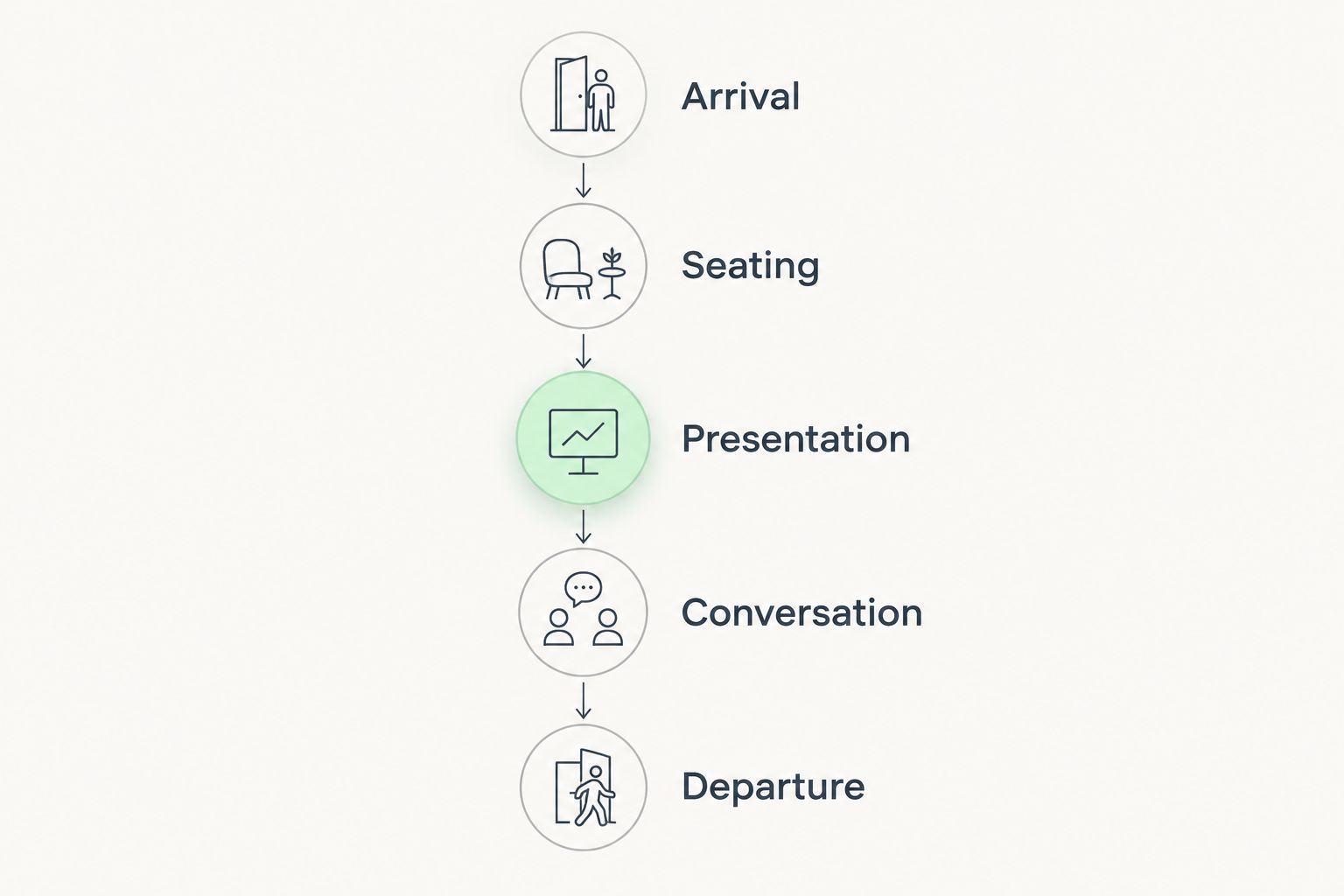
Use a suggested 15-minute walkthrough checklist to keep the inspection focused. The goal is to identify practical questions, not to infer capacity, accessibility, or equipment specifications from appearance.
- Arrival: Check entrance instructions and the check-in location.
- Seating: Check sightlines in the proposed arrangement.
- Presentation: Check sound and display requirements.
- Conversation: Check where smaller discussions will happen.
- Departure: Check the exit route and closing responsibilities.
5. Build an agenda around the guest benefit
Write the agenda yourself before adding speakers or partners. Put the promised benefit first: understanding the buying process, reconnecting with your team, or meeting local professional contacts. Each addition should help deliver that benefit rather than interrupt it.
For an educational event, distinguish general information from individual advice. Ask mortgage, legal, tax, or other specialist speakers to explain their roles accurately and avoid promises about a guest's personal outcome. Have your brokerage review promotional language and partner arrangements where appropriate.
For a client appreciation event, remove the compulsory sales presentation. You can make yourself available for real estate questions without turning the gathering into an appointment-setting exercise.
- State the guest benefit in the opening remarks.
- Give each speaker a defined topic and handoff.
- Reserve a clear period for audience questions.
- Keep individual financial details out of group discussions.
- Make any consultation invitation optional.
6. Confirm responsibilities before promoting the event
Build a written responsibility sheet using a shared document. Assign each task to your team, the venue, or another provider, and resolve overlaps before sending invitations. An unassigned task is not automatically included in venue hosting.
For your 2026 event, distinguish guest access from organizer access. You need to know when setup can begin, when guests should arrive, and when materials must leave. Copy the agreed terms into your planning sheet rather than relying on a conversation from the walkthrough.
Do not announce a feature until the responsible party has confirmed it. This applies to food arrangements, presentation equipment, parking instructions, and any guest-facing service you intend to mention.
- Document setup, guest arrival, and departure arrangements.
- Confirm which room or areas your event can use.
- Assign food, equipment, signage, and cleanup responsibilities.
- Review cancellation and event-change terms in the agreement.
- Name the event-day contact for each responsible party.
7. Measure useful follow-up rather than room activity
Start with a spreadsheet containing registrations, attendance, event purpose, and follow-up preferences. Keep administrative messages separate from promotional contact, and use your brokerage's approved process for handling guest information.
Match the measurement to the format. For a buyer workshop, record requests for further explanation or an individual conversation. For client appreciation, record attendance and relationship notes that guests voluntarily share. A busy room does not establish that the event created business.
Use the same definitions throughout your 2026 event calendar. Comparing unlike events under a single success label hides whether the format actually served its audience.
- Record registrations and actual attendance separately.
- Capture follow-up preferences without collecting unnecessary personal details.
- Track requested conversations rather than assumed interest.
- Note which invitation source each guest identifies.
- Review what to repeat, remove, or change before the next event.
Compare venue options for real estate events
The best venue category depends on the job you need the room to perform. Use this table to shortlist options, then verify the specific property's rules and arrangements. These are planning trade-offs, not claims about every venue in a category.
| Option | Best for | Main advantage | Key limitation |
|---|---|---|---|
| Private party or banquet venue | Client appreciation and hosted social gatherings | Separates the gathering from a property showing | Presentation setup and included services need confirmation |
| Meeting or conference room | Buyer education and structured presentations | Supports a meeting-first event brief | Social areas and hospitality arrangements need checking |
| Restaurant private room | Relationship-focused meals | Makes the meal the organizing activity | Privacy, sound, and presentation suitability need checking |
| Brokerage office | Team-led sessions using familiar premises | Keeps the event in your existing workplace | Guest access and meeting space need checking |
| Listing property | Property-specific introductions and tours | Connects the gathering directly to the property | Requires appropriate permission and clear property-use boundaries |
Longislandprivateevents belongs in the private-event hosting shortlist, not a software or training-provider comparison. Its stated service is venue and event hosting; your educational content, specialist advice, and brokerage approvals remain separate responsibilities.
Explore private event hosting
Discuss your real estate event's purpose, proposed format, and hosting requirements.
Common mistakes real estate agents make
Mixing audiences without a shared purpose
Inviting buyers, sellers, past clients, and professional contacts does not create a useful program by itself. Give the gathering a shared purpose or separate the formats. Otherwise, the invitation promises relevance that the agenda does not deliver.
Treating every guest as a sales lead
A thank-you invitation establishes a different expectation from a consultation invitation. Keep the event consistent with that expectation, and ask guests whether they want a business follow-up rather than assuming attendance provides that answer.
Choosing a room before defining the program
A banquet-style arrangement and a presentation arrangement ask different things of the same space. Confirm the layout you will actually use, including sightlines, arrival flow, and space for questions—not just the room's appearance during a tour.
Making unapproved promises through partners
A guest speaker's presence does not validate every claim in an invitation or presentation. Review partner descriptions, financial statements, and any promised outcomes through the appropriate professional and brokerage channels before publication.
Counting registrations as results
Registration, attendance, and a requested conversation are different measures. Keep them separate in the event record, and compare each gathering against its stated purpose rather than treating the invitation list as evidence of success.
FAQ
What's the best event space for real estate agents?
The best event space for real estate agents matches the event's purpose and guest experience. Shortlist private-event venues for appreciation gatherings, meeting rooms for structured education, and listing properties for property-specific tours, then confirm each location's arrangements.
Is a private venue better than hosting at a listing?
A private venue is the better fit when the gathering is about clients or education rather than the property itself. A listing is appropriate when seeing that property is the central purpose and the necessary permissions are in place.
Can I host a first-time buyer workshop in a banquet venue?
A banquet venue is a suitable workshop candidate only when the confirmed setup supports speaking, listening, and questions. Verify seating, sound, presentation requirements, and the separation of group discussion from individual conversations.
What should I ask before booking a real estate networking event?
Ask who handles setup, guest arrival, food arrangements, equipment, and cleanup. Confirm room access, event timing, change terms, and an event-day contact in writing before promoting the gathering.
How do I choose the right room size?
Choose the room around your expected attendance and actual layout, then ask the venue to confirm suitability. Seated education, meals, and informal networking use space differently, so do not rely on photographs alone.
Should mortgage or legal professionals speak at my event?
Invite specialist speakers when their expertise directly supports the event's stated purpose. Clarify their roles, review promotional wording, and keep individual financial or legal questions out of the public discussion.
How do I measure whether a client event worked?
Measure whether the gathering achieved its stated purpose using attendance, guest feedback, and requested follow-up conversations. Keep registrations separate from attendance, and do not treat every attendee as a prospective transaction.
One last thing
Before booking your 2026 event, write the message you want to send guests afterward. If the useful follow-up is a workshop recap, build an educational program; if it is a genuine thank-you, protect the social experience. The follow-up message is a practical test of whether your venue, invitation, and agenda serve the same purpose.