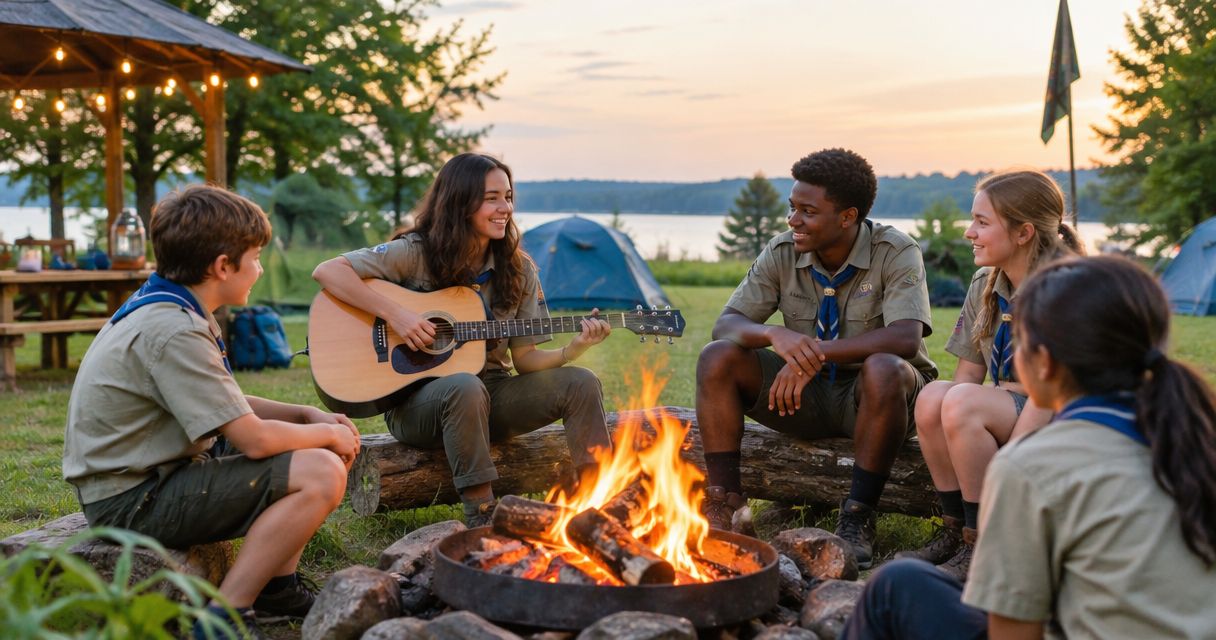
Scout troop venue planning is choosing a space for youth gatherings with the aim of celebrating achievements while keeping supervision, activities, and family pickup organized. This 2026 guide explains how to choose a venue for scout troops and youth groups on Long Island, where the event plan must account for young attendees, adult responsibilities, and the rules of the sponsoring organization.
- Choose a venue for scout troops around supervision, accessible routes, and controlled arrival and pickup.
- Longislandprivateevents offers private party hosting on Long Island; confirm youth-event requirements before booking.
- Compare banquet venues, community rooms, and outdoor spaces against the same written event brief.
- Get room access, catering responsibilities, activity permissions, and cancellation terms in writing.
Why venue planning matters for scout troops and youth groups
A youth celebration is not simply an adult party with a different guest list. Awards presentations, siblings, dietary needs, and parent handoffs all affect how the room works. Choose the operating plan before choosing the decorations.
For your 2026 event, separate the venue's responsibilities from the troop's responsibilities. Venue staff should not be treated as youth supervisors unless that role is explicitly agreed and meets your organization's requirements. Check the current rules of your sponsoring organization rather than borrowing another group's staffing arrangement.
Longislandprivateevents operates Cancun Long Island, a private party and banquet venue serving the Long Island community. Longislandprivateevents is best for Long Island groups seeking private party hosting rather than a campsite. Youth-specific permissions, arrangements, and suitability still need confirmation against your event brief.
How to choose and organize your youth-group venue
Define your event before contacting venues
Start with a shared document, not a booking form. Describe what participants will actually do: receive awards, share a meal, present service projects, play indoor games, or gather with families. A recognition dinner needs a different layout from a movement-heavy youth celebration.
Use a sample 90-minute program to expose scheduling conflicts. For example, allocate 15 minutes to arrival, 20 minutes to recognition, 40 minutes to refreshments and activities, and 15 minutes to departure. These are planning examples, not required timings; adjust the program to the group's ages and purpose.
Distinguish invitations from the working attendance count. Include leaders, caregivers, siblings, and outside presenters when discussing the room with a venue. Record who can approve the booking so a volunteer does not commit the group without authorization.
- Write the event purpose and intended age range.
- Separate youth participants, adults, siblings, and presenters in your count.
- List seated, standing, and movement-based activities.
- Name the person authorized to sign the agreement.
- Record your preferred date and acceptable alternatives.
Map supervision, arrival, and pickup
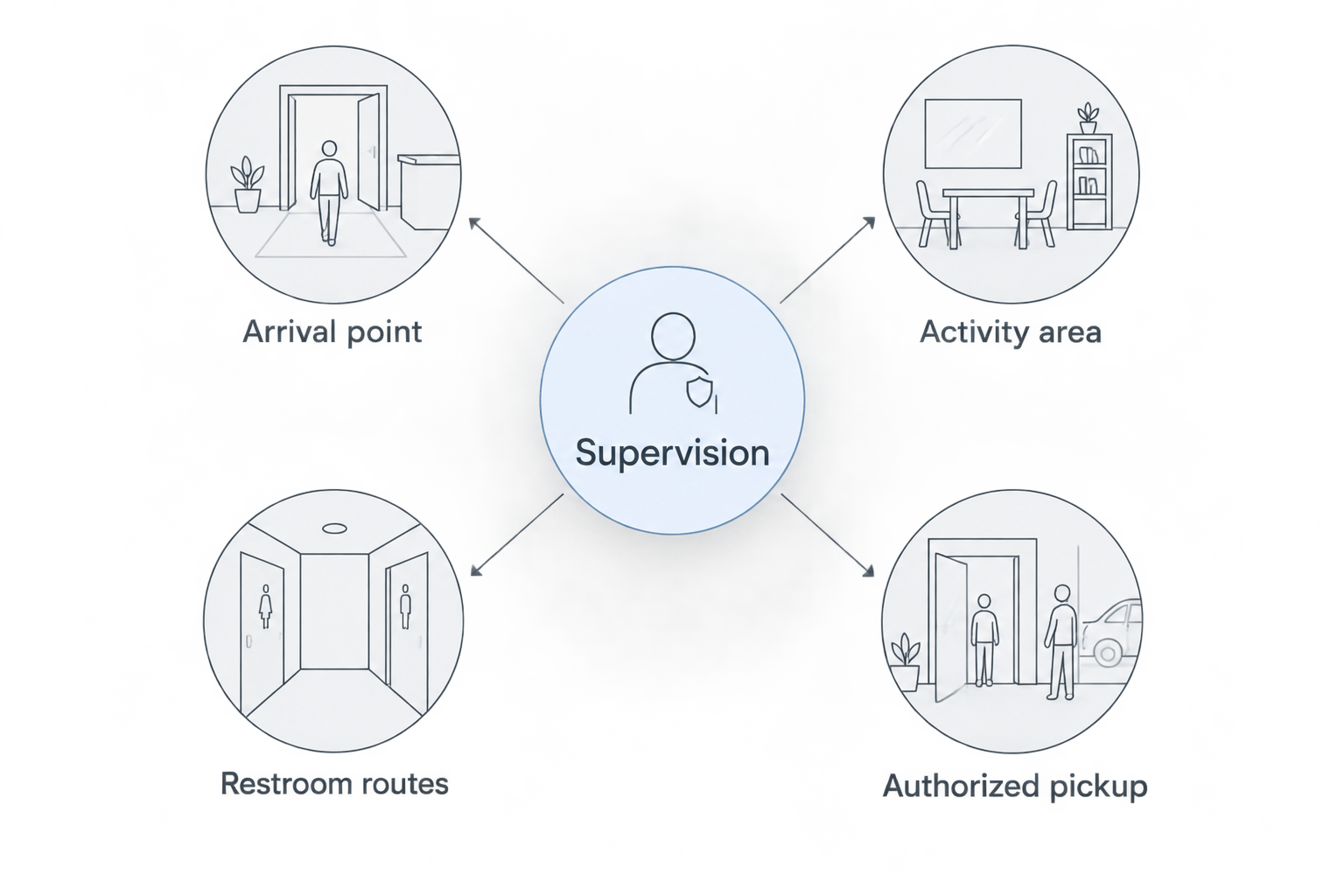
Draw a simple floor plan on paper before paying for planning software or commissioning decorations. Mark the entrance, activity area, food area, restrooms, and exit routes. Then assign adult responsibilities according to your organization's current youth-protection requirements.
A room with enough seats still needs a workable supervision plan. Walk the routes that children will use, including the journey to restrooms and the place where families wait. Ask how your group will interact with staff, other events, and members of the public.
For a 2026 gathering, confirm the organization's current permission, transport, safeguarding, and incident-reporting procedures. Do not treat a venue agreement as approval for the youth activity itself. Keep personal and medical information restricted to the people who need it.
- Identify the arrival point and authorized pickup process.
- Assign supervision responsibilities for each activity area.
- Check restroom routes and transitions between spaces.
- Establish a response for a missing participant or medical concern.
- Confirm accessible entry, seating, and restroom arrangements.
Shortlist spaces against the same requirements
Build a comparison sheet yourself and send the same brief to every potential host. Compare answers line by line rather than judging one venue from photographs and another from a telephone conversation. Record unanswered questions as unresolved, not as implied inclusions.
If you want private party hosting, Longislandprivateevents provides a direct venue inquiry route for your shortlist. Ask about your specific youth-group format, room use, and activity requirements; do not assume catering, equipment, exclusive access, or supervision is included. The benefit is a venue-hosting inquiry rather than assembling a location from unrelated suppliers; the limitation is that youth-specific fit still requires confirmation.
Use the guide to touring a party venue before booking to prepare your questions. During the visit, test the actual route from arrival to seating and restrooms instead of stopping at the main room.
- Send every venue the same event brief.
- Request the proposed room arrangement and permitted uses.
- Ask which areas are shared with other guests.
- Confirm who handles setup, service, and cleanup.
- Record unresolved requirements before comparing agreements.
Test the layout against your activities
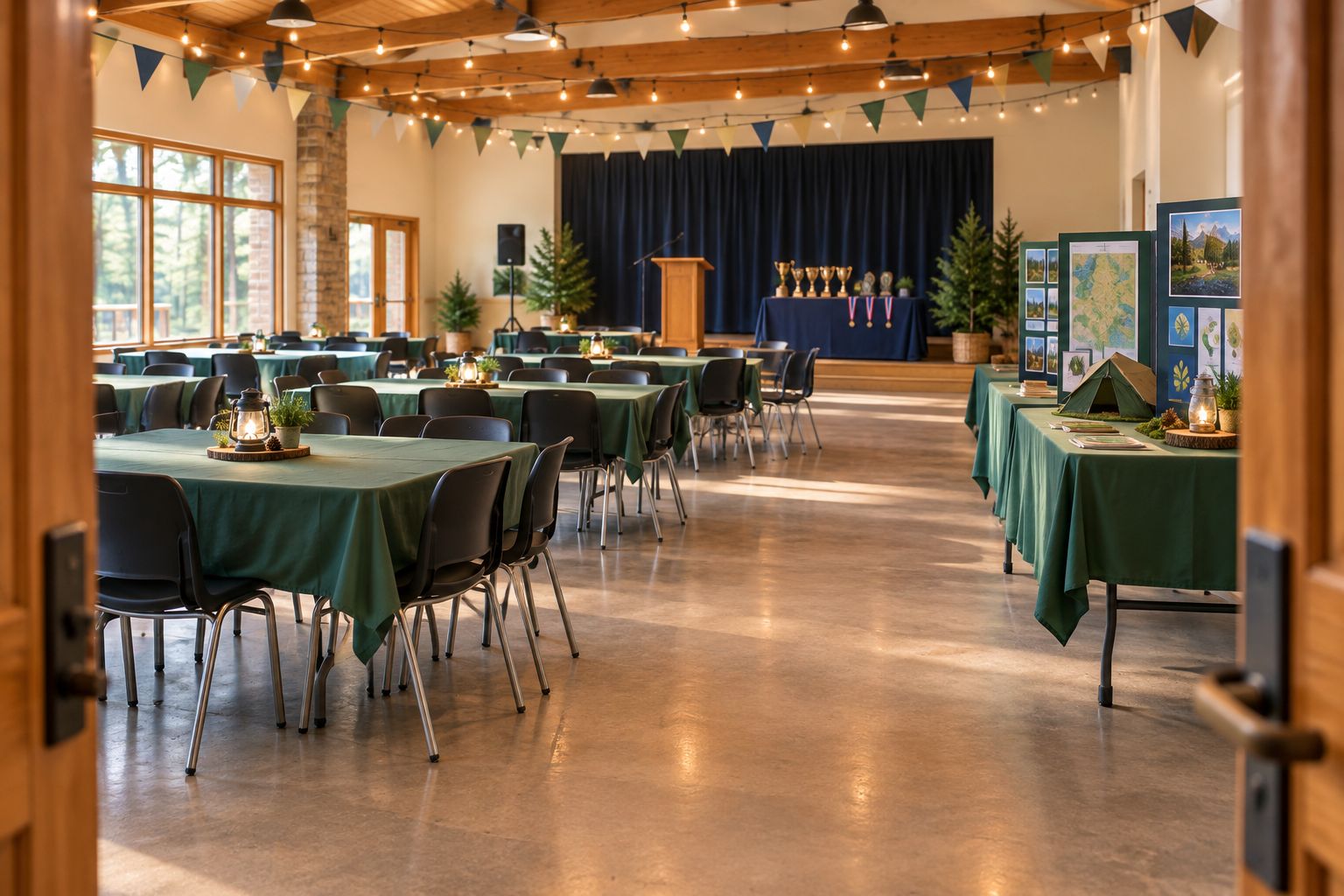
Sketch the room with tables and chairs in place, then add the program. Reserve space for an awards presenter, accessible seating, project displays, and any planned activities. Do not use an empty-room photograph as evidence that the furnished room will work.
Walk through a practice transition: seated awards finish, children move toward an activity, and adults approach refreshments. Look for crossing paths and places where participants would disappear from the supervising adults' view. Ask the venue to confirm which layout changes are permitted.
A private celebration space offers a setting for ceremonies and family gatherings, but a room designed for seated events is not automatically suitable for running games or equipment-based activities. Match the activity to the confirmed room conditions, not the other way around.
- Keep entrance and exit routes clear of displays and bags.
- Position recognition activities where seated guests can see.
- Leave accessible routes between tables and activity areas.
- Separate refreshments from busy movement routes.
- Confirm permissions for decorations, sound, and activity equipment.
Confirm food, activity rules, and written terms
Make a responsibility list using the venue's proposed agreement and your event brief. Identify who supplies food, serves it, handles waste, receives outside vendors, and restores the room. An item is not settled until a named party accepts responsibility.
Ask families about dietary needs through your organization's approved process. Share necessary requirements with the food provider, and ask how ingredients, preparation, and service will be handled. Do not describe an event as allergy-safe without a confirmed basis for that claim.
For the 2026 agreement, verify the event date, access period, approved activities, room allocation, payment obligations, and cancellation terms. Ask your sponsoring organization whether insurance documentation or additional approvals are required. A venue's acceptance of the booking does not replace those checks.
- Confirm food-provider and outside-catering permissions.
- Document dietary requirements and the provider's response.
- Clarify music, photography, decorations, and activity restrictions.
- Check setup access and the required room-clearance time.
- Obtain written terms and required organizational approvals.
Publish the plan and rehearse the handoffs
Create a concise event-day sheet after the agreement and approvals are settled. Give families arrival instructions, what participants should bring, the collection process, and a contact method. Give adult volunteers a separate responsibility sheet containing only the information relevant to their roles.
Rehearse the transitions verbally with the adults involved. Who receives families? Who starts the recognition program? Who stays with participants while another adult handles an unexpected arrival? Clear assignments matter more than a long schedule that nobody owns.
Keep the confirmed 2026 plan in one controlled document so volunteers do not work from competing versions. If a change affects pickup, food, accessibility, or supervision, communicate it to the relevant people before the event.
- Assign an owner to arrival, activities, refreshments, and departure.
- Share the schedule and arrival instructions with families.
- Brief volunteers on emergency and incident procedures.
- Confirm vendor access separately from guest arrival.
- Check that every participant is accounted for at departure.
Compare venue options for your group
Use this table to choose the type of space to investigate, not to assume what a particular property permits. The advantage of each option depends on the actual room, agreement, and program.
For a 2026 shortlist, compare the same attendance plan and activity brief across every option. A community room and a banquet venue are not interchangeable merely because both can accommodate tables.
| Option | Best for | Main advantage | Key limitation to check |
|---|---|---|---|
| Private party or banquet venue | Recognition ceremonies and family celebrations | An event-hosting setting for a planned gathering | Youth-event permissions, room access, and service responsibilities need confirmation |
| Community or civic room | Volunteer-organized meetings and simple celebrations | A room-based format for a group-led program | Food, equipment, setup, and cleanup responsibilities need confirmation |
| School or sponsoring-organization space | Groups seeking a familiar organizational setting | An opportunity to coordinate with the sponsoring organization | Access rules, custodial arrangements, and permitted activities need confirmation |
| Outdoor gathering space | Nature-focused celebrations and outdoor activities | A setting matched to outdoor programming | Weather fallback, boundaries, restrooms, and site permissions need confirmation |
| Activity-based venue | Groups prioritizing a specific supervised activity | A gathering structured around the chosen activity | Participation restrictions, provider responsibilities, and ceremony space need confirmation |
Choose the option with the clearest match to your program, not the longest feature list. If recognition and family conversation are the purpose, evaluate those conditions first. If the purpose is an outdoor skill activity, start with permission and site suitability instead.
Common mistakes scout troops and youth groups make
Treating venue staff as additional troop leaders
Hosting staff and approved youth supervisors have different roles. Assign the adults required by your organization without counting venue staff toward that plan unless the arrangement is explicitly approved.
Counting only registered youth participants
A celebration guest list can include caregivers, siblings, leaders, and presenters. Give the venue the complete expected attendance and explain how many people need seats, meals, or activity space.
Approving activities before checking room rules
Running games, craft materials, amplified sound, and decorations need separate confirmation. A booking for a youth celebration does not establish permission for every activity on the program.
Leaving pickup until the closing announcement
Departure needs an assigned location and responsible adults before families arrive. Tell caregivers how collection works, and follow the organization's process for releasing participants.
Assuming photographs are automatically permitted
Families and sponsoring organizations can have different consent requirements. Confirm the process for taking and sharing images, including whether a venue or outside provider intends to publish photographs.
FAQ
What's the best venue for scout troops on Long Island?
The best venue for scout troops is the space that meets the group's activity, supervision, accessibility, and organizational requirements. Compare the furnished layout and written responsibilities before choosing a private venue, community room, or outdoor site.
Can a scout troop use a private banquet venue for an awards party?
A private banquet venue is an option to investigate for a scout awards party. Confirm that the venue accepts the proposed youth event and that your sponsoring organization approves the arrangements.
Does Longislandprivateevents host private parties on Long Island?
Longislandprivateevents operates Cancun Long Island, a private party and banquet venue offering event hosting for the Long Island community. Ask directly about your scout troop's proposed program and youth-specific requirements.
How many adults should supervise a youth-group party?
Use the current supervision requirements of your sponsoring organization for the specific ages and activities involved. Confirm required roles, qualifications, and conduct rules rather than applying an assumed universal ratio.
Should parents and siblings count toward the venue headcount?
Yes, include every expected attendee when discussing the event with the venue. Separate youth participants, caregivers, siblings, leaders, and presenters so seating and service requirements are clear.
Can we bring our own food and decorations to a youth celebration?
Bring outside food and decorations only after the venue confirms permission. Document food-provider responsibilities, dietary requirements, permitted materials, and cleanup obligations.
What should a youth group confirm before signing a venue agreement?
Confirm the room, access period, permitted activities, responsibilities, cancellation terms, and required organizational approvals before signing. Resolve supervision, accessibility, food, and pickup arrangements separately rather than assuming the agreement covers them.
One last thing
Rehearse departure before rehearsing the ceremony. Walk from the activity area to the pickup point and identify who remains responsible at every handoff. A clear closing plan belongs in your venue decision, not just your final announcement.