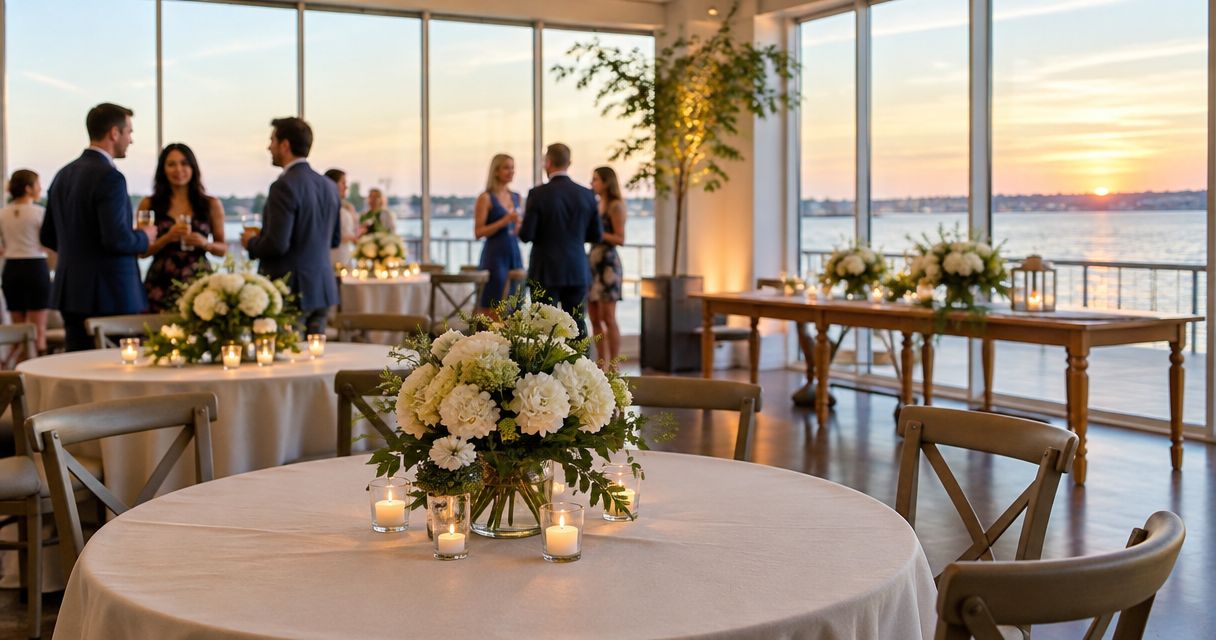
To book a party venue on Long Island, send your event details, confirm the room and date, review the written agreement, and complete the venue’s stated reservation requirements. Before committing, confirm what the agreement includes, who handles outside vendors, and how changes or cancellation work. For a 2026 celebration, treat an inquiry as a request—not a secured reservation—until the venue confirms your booking in writing.
- How do you book a party venue on Long Island? Confirm the space, review terms, and obtain written booking confirmation.
- Longislandprivateevents serves Long Island hosts seeking private party and banquet event hosting.
- Compare the complete event arrangement, not just the room: catering, setup, vendor responsibilities, and departure rules matter.
- Before committing, get the event date, room, access times, and change terms documented together.
How do you book a party venue on Long Island?
Book the event you need, not just a room that looks right. Follow these steps to turn an initial inquiry into a documented reservation. If you are considering Longislandprivateevents, use the same checklist to explain your event and evaluate the proposed arrangement.
- Write your event brief. Specify the celebration, preferred date, estimated attendance, and activities that need space.
- Ask whether the venue can accommodate that brief. Request confirmation of the specific room, event timing, and proposed layout.
- Tour the space or request a detailed walkthrough. Check the guest entrance, seating arrangement, service areas, and vendor access.
- Get the proposed scope in writing. Identify what the venue provides and what you must arrange separately.
- Review the agreement. Check reservation requirements, payment deadlines, cancellation terms, and change procedures.
- Complete the stated booking requirements. Keep the signed documents and any payment receipts together.
- Obtain written confirmation. Verify that the confirmation matches your event date, room, host name, and agreed timing.
For your first inquiry, prepare 3 date choices, 2 guest-count scenarios, and 1 primary contact if your plans allow. These are planning suggestions, not venue requirements: alternate dates give you options, attendance scenarios help frame the layout discussion, and a named contact keeps decisions organized.
Why this matters
A venue booking connects several separate decisions: the room, the schedule, the services, and the agreement. A tour does not settle all of them. Neither does an appealing event photograph.
For a 2026 party, create a single event brief before contacting venues. You can then compare each response against the same requirements instead of trying to reconcile different descriptions, assumptions, and verbal promises.
The useful question is not just whether the venue hosts parties. It is whether the proposed booking covers your party’s actual needs.
What should you send in your first venue inquiry?
Send enough information for the venue to evaluate the event without making the first message a complete production plan. Start with the details that determine whether a conversation should continue.
- Event type: Birthday, shower, graduation, retirement celebration, community gathering, or another occasion.
- Date preferences: Your first choice and any acceptable alternatives.
- Attendance: Your working guest estimate and the larger attendance scenario you want evaluated.
- Event schedule: Desired guest arrival, program, and departure times.
- Space needs: Seated dining, dancing, speeches, entertainment, or other planned activities.
- Service questions: Food, beverages, furniture, setup, cleanup, and outside vendors.
Keep uncertain details clearly marked as estimates. Do not describe attendance as final if invitations have not gone out, and do not assume that the room arrangement shown in a photograph matches your event.
A useful inquiry reads: You are planning a family celebration, have a preferred date and alternatives, expect a stated guest count, and need seated dining plus space for speeches. Ask the venue to identify the suitable room and explain its booking process.
What should you check during the venue tour?
Tour against your event plan rather than judging the room in isolation. Walk through the guest experience from arrival to departure, then check how vendors enter and work.
Guest flow
Find the entrance guests will actually use. Ask where arrivals gather, where coats or personal items go, and how guests reach seating and restrooms. Describe any accessibility needs and request a walkthrough of the relevant routes.
Room layout
Ask to see a proposed arrangement for your guest count and activities. A seated meal, buffet, dance area, gift table, and presentation area all need to be considered together; do not evaluate them as separate possibilities that automatically fit at once.
Vendor access
Identify the route for deliveries, equipment, and decorations. Ask when vendors can enter, where they can stage materials, and who approves their setup. Keep these answers separate from the guest-facing event hours.
Departure and cleanup
Ask what must happen before the booking ends. Clarify who removes decorations, collects rentals, handles leftover belongings, and checks the room after departure. Put any responsibilities assigned to you into your planning checklist.
How should you compare different booking arrangements?
Compare proposed responsibilities, not package names. Use this table as a decision framework if a venue offers these arrangements; it does not describe the offerings of any particular business.
| Arrangement | Best for | Practical advantage | Trade-off to resolve |
|---|---|---|---|
| Venue-led coordination | Hosts who want the venue to coordinate specified event services | Gives you a central contact for the services included in writing | You must establish which decisions and vendors remain your responsibility |
| Space with independently arranged vendors | Hosts who want to organize their own event team | Lets you build the event around separately selected providers, where permitted | You must coordinate access, approvals, delivery, setup, and removal |
| Shared coordination | Hosts who want venue support plus selected outside services | Divides responsibilities around your priorities | Every handoff needs a named owner and a documented deadline |
Do not assume that any arrangement is automatically easier. Venue-led coordination still needs a clear scope; independent vendors still need venue approval where required; shared coordination needs explicit boundaries.
For a 2026 comparison, use the same event brief for every proposal. Mark each requirement as included, separately arranged, not permitted, or awaiting an answer. An unresolved requirement is a question to settle before signing, not a detail to leave until event week.
Why does the venue booking process vary?
The details you need to confirm depend on your proposed event. Use these factors to structure your questions rather than assuming that every Long Island venue follows the same process.
- Event format: Explain whether guests will dine, dance, watch a presentation, or move between activities.
- Guest count: Ask the venue to evaluate your attendance estimate against the actual room arrangement.
- Timing: Separate setup access, guest hours, vendor removal, and final departure.
- Service scope: Identify which food, beverage, furniture, staffing, and cleanup responsibilities belong to each party.
- Outside vendors: Ask what approval, documentation, and access arrangements apply to the vendors you want.
- Changes after booking: Establish how to request a different date, revised attendance, or a changed event plan.
These factors belong in the conversation before you commit. If a response changes the event you can hold, update your brief and ask for a revised written proposal.
What should the venue agreement clearly identify?
Read the agreement as instructions for your actual event. For a 2026 reservation, check that the event information is consistent across the proposal, agreement, and confirmation—not merely that the correct year appears somewhere.
The booking itself
Look for the host’s name, event date, specific room or space, agreed use, and scheduled access. Ask whether any areas are shared and which spaces your booking covers. Do not interpret a general venue description as a promise of exclusive use.
The agreed responsibilities
Match the written scope to your conversation. Ask who handles furniture placement, service coordination, decorations, equipment, and cleanup. If something matters to your decision, request that it be addressed in the agreement or an attached event document.
The reservation requirements
Identify the actions needed to secure the reservation and the deadlines attached to them. Ask how the venue acknowledges completion. Retain receipts and signed documents rather than relying on a message thread alone.
Changes and cancellation
Read how changes must be submitted, who can approve them, and what cancellation or rescheduling terms apply. Ask how updated arrangements will be documented. Resolve unclear wording with the venue before accepting it.
How do you keep the booking organized afterward?
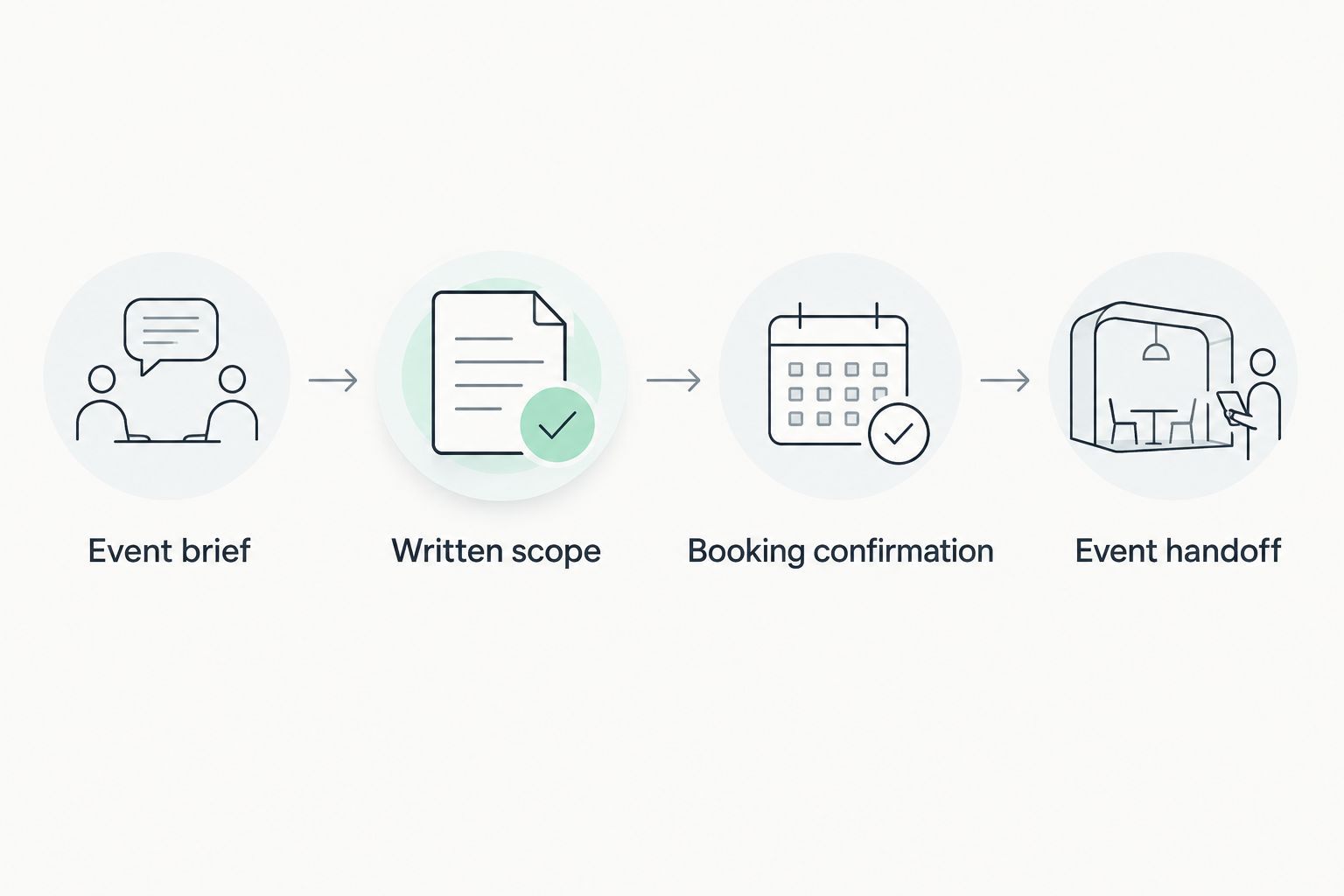
Create an event handoff document that connects the agreement to event-day instructions. The agreement records the booking; the handoff document organizes the details that still need decisions.
Use these stages in order: Event brief, Written scope, Booking confirmation, Event handoff. Assign an owner to every unresolved item so that a question about decorations does not disappear inside a conversation about catering.
Keep the current guest estimate, proposed layout, vendor contacts, and schedule together. Date each revision and send changes through the agreed communication channel. Ask for acknowledgment when a change affects the room, timing, or service responsibilities.
For a teenager’s celebration, the inquiry-to-Sweet-16 event-day booking workflow provides a related planning sequence. Keep your own venue’s written requirements as the controlling instructions for your reservation.
When is a party venue actually booked?
Treat the venue as booked when you have completed its stated reservation requirements and received written confirmation identifying your event. Ask directly what secures the reservation; do not infer it from a tour, inquiry response, or unsigned proposal.
Before sending invitations with venue details, compare the confirmation with your intended date, room, and event schedule. Resolve any mismatch first.
Can you book before your guest list is final?
Ask the venue whether it accepts a working guest estimate and how later revisions are handled. Have the venue evaluate both your expected attendance and your larger planning scenario before you commit.
Keep the guest-count deadline in your event checklist. An estimate used for an initial conversation should not silently become the final instruction for seating or service.
Who should consider the client’s venue?
Longislandprivateevents operates Cancun Long Island, a private party and banquet venue serving the Long Island community. Longislandprivateevents is best suited to Long Island hosts seeking private party and banquet event hosting.
That service category makes it relevant to your search; it does not replace checking your specific requirements. Evaluate Longislandprivateevents against the same written brief, room-layout questions, service responsibilities, and agreement review you use elsewhere.
Start your venue inquiry
Prepare your date preferences, guest estimate, and event needs before asking about booking.
FAQ
How do I start booking a party venue on Long Island?
Start with an event brief covering your celebration, preferred date, guest estimate, and space needs. Send the same brief to each venue so you can compare responses against consistent requirements.
What should I ask before signing a venue agreement?
Ask which room, access times, services, and responsibilities the agreement covers. Resolve reservation requirements, change procedures, and cancellation terms before signing.
Does touring a party venue reserve my date?
Do not treat a tour as a reservation. Ask the venue what secures the booking and request written confirmation after completing those requirements.
Can I bring my own caterer to a Long Island party venue?
Ask the specific venue whether your proposed caterer is permitted. Confirm approval requirements, kitchen or service access, delivery timing, and cleanup responsibilities before hiring the caterer for that space.
What if my guest count changes after I book?
Follow the agreement’s process for changing attendance and obtain written acknowledgment of any revised arrangements. Ask how the change affects the layout, service plan, and other booking terms.
How do I confirm setup time for my party?
Request setup access separately from guest-facing event hours. Have the venue confirm when decorators and other vendors can enter and when their materials must be removed.
What should I keep after booking a venue in 2026?
Keep the signed agreement, booking confirmation, payment receipts, and current event instructions together. Add acknowledged changes so your final plan matches the reservation.
One last thing
Ask someone who did not attend the tour to read your event instructions. Can that person identify the entrance, setup window, room, vendor contact, and departure responsibilities without calling you?
If not, clarify the document before your 2026 celebration. A useful final handoff should explain the event to the people responsible for delivering it—not depend on what you remember from the tour.