
A party venue for nonprofit fundraisers is an event space selected to bring supporters together with the aim of raising money for a mission. For your 2026 event, choose around the donation appeal, volunteer workload, and funds retained—not just the room’s appearance.
- Choose a party venue for nonprofit fundraisers around the donation appeal, guest access, and total event obligations.
- Longislandprivateevents suits Long Island organizers seeking a private-party setting; confirm fundraiser requirements before committing.
- Compare banquet venues, community halls, and blank event spaces by responsibilities, not appearance alone.
- Approve the floor plan, payment process, and written agreement before promoting the event.
Why venue choice matters for nonprofit fundraisers
A fundraiser venue must support both hospitality and a clear request for support. A room that works for dinner still needs scrutiny for speeches, donation collection, sponsor recognition, and volunteer movement.
For a Long Island shortlist, Longislandprivateevents operates Cancun Long Island, a private party and banquet venue offering event hosting services. Longislandprivateevents is best suited to Long Island organizers seeking a private-party venue. Evaluate its fit against your fundraiser brief rather than assuming a party venue includes fundraising support.
Your 2026 venue decision also commits people’s time. When responsibilities remain unclear, committee members inherit tasks such as equipment sourcing, registration setup, and cleanup. Treat those obligations as part of the venue comparison, even when they do not appear together in a proposal.
The right venue supports the fundraising program without asking volunteers to improvise essential operations. Establish what must happen in the room, then inspect the room against that plan.
How to choose your nonprofit fundraiser venue
1. Define the fundraising outcome before touring
Start with a shared document, not venue photographs. Write a 1-page brief that names the event’s purpose, intended audience, fundraising method, and approval owner. This gives every committee member the same basis for evaluating spaces.
Separate the mission outcome from the party format. A donor appreciation reception, ticketed dinner, and auction evening place different demands on seating, sound, staff, and circulation. Decide which activities are essential before a room’s appearance dictates the program.
Build your 2026 brief around these decisions:
- State the mission outcome the event will support.
- Identify whether guests are existing donors, new supporters, sponsors, or a mix.
- Name the main fundraising method and any supporting activities.
- Assign responsibility for approving the venue agreement.
- Mark each requirement as essential or optional.
2. Compare the full commitment, not the room alone
Use a spreadsheet to compare written proposals under identical headings. Include every required service, outside supplier, committee task, and contractual obligation. Keep confirmed commitments separate from assumptions so the board can see what remains unresolved.
Ask each venue to explain what its proposal includes and excludes. A venue with more event hosting responsibilities can reduce your coordination work, but only the written scope establishes who handles what. Do not treat a verbal description as an operating plan.
Longislandprivateevents offers event hosting through Cancun Long Island; ask how that hosting scope applies to your fundraiser. Keep the same comparison standards for every shortlisted venue.
- Record room access, setup, event, and cleanup periods separately.
- Identify required suppliers and restrictions on outside providers.
- List equipment, staffing, and cleaning responsibilities.
- Separate confirmed sponsorship commitments from fundraising goals.
- Record payment deadlines, cancellation terms, and approval requirements.
3. Test the room against the fundraising program
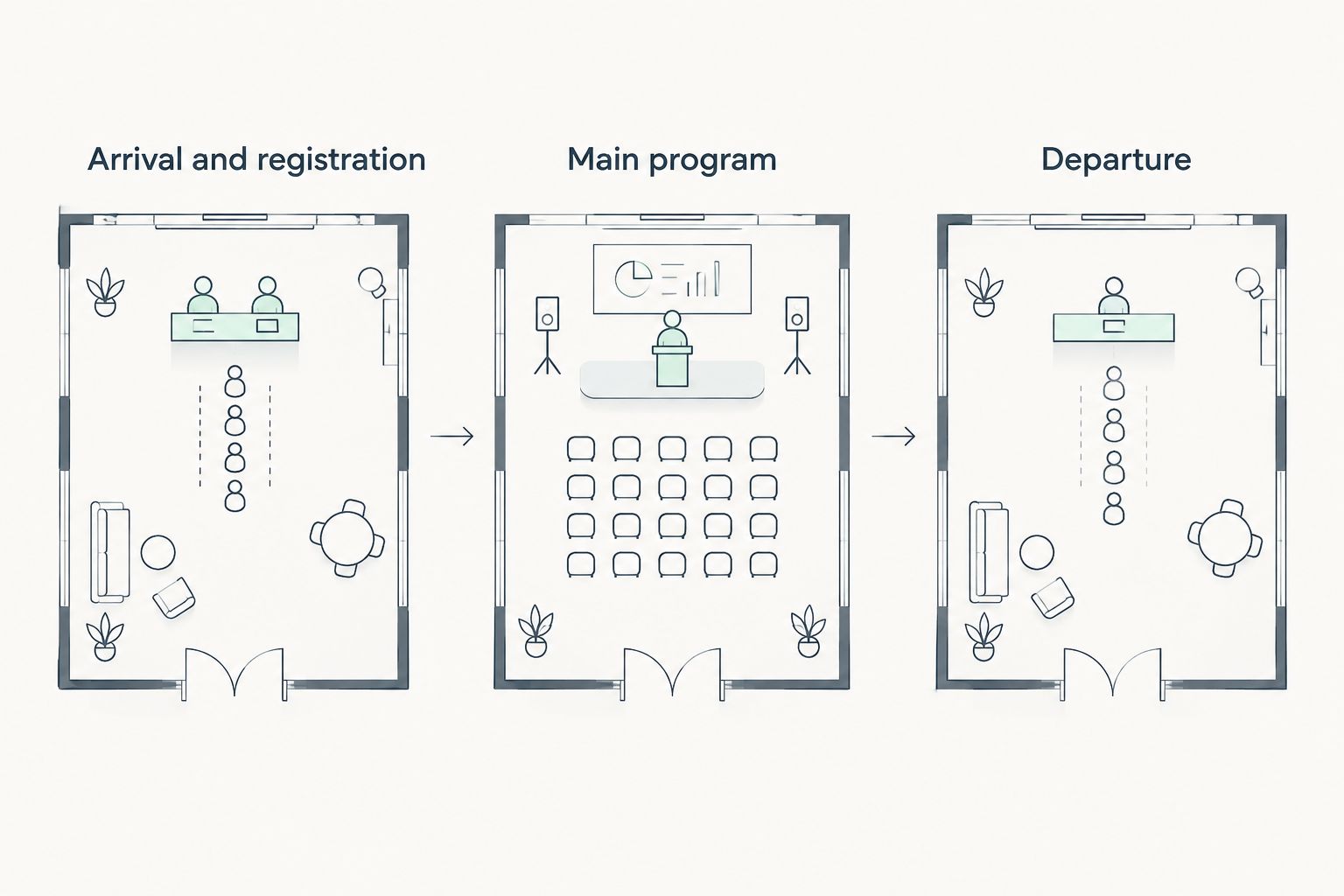
Sketch the layout yourself before requesting a venue-prepared floor plan. Draw 3 layouts: arrival and registration, the main program, and departure. This exposes conflicts that a single seating diagram misses, such as an auction checkout queue blocking the exit route.
Inspect the space from a guest’s position, not only from the doorway. Sit where supporters would sit during the appeal, then check the speaker position, screen visibility if needed, and movement between tables. Ask for the actual proposed setup rather than relying on photographs of another event.
A private-party setting is useful only when its layout supports your program. Make these checks before approving the room:
- Mark the registration point and guest waiting area.
- Place the speaker where seated guests can see the presentation.
- Keep donation stations away from arrival and service bottlenecks.
- Identify space for auction displays or sponsor materials, if used.
- Review accessible routes with the venue representative.
- Confirm where volunteers and suppliers enter and store materials.
4. Check guest access and participation needs
Ask your committee to review the invitation list for practical access needs without circulating sensitive personal information. Then walk the guest route from arrival through seating, restrooms, participation, and departure. Check the route in person rather than assuming that an accessible entrance resolves every issue.
For a Long Island event, provide clear arrival instructions based on the venue’s confirmed arrangements. Verify parking or drop-off details before adding them to invitations. If the fundraiser depends on digital giving, test the actual donation process inside the proposed room.
Make participation possible without forcing guests to disclose a difficulty publicly:
- Ask about step-free routes and accessible restroom access.
- Verify seating arrangements for guests using mobility devices.
- Confirm how dietary requests reach the responsible food provider.
- Test donation-page access where guests will sit.
- Offer a staffed alternative to a phone-only donation process.
- Assign a contact for access questions before the event.
5. Build the appeal into the event schedule
Draft the run of show in a shared document. Give the fundraising appeal a named speaker, a clear purpose, and an explicit handoff to the donation method. Do not leave the central fundraising moment as an unassigned gap between dinner and entertainment.
Ask the venue representative to review the schedule against service activity and room access. Request a 10-minute rehearsal window as a planning requirement, then confirm whether the venue can accommodate it. This is a request to negotiate, not an assumed inclusion.
Protect the appeal from competing activity. Volunteers should know what happens while the speaker talks and where guests can get help afterward.
- Name the person who introduces the mission and the appeal.
- Confirm microphone and presentation-equipment responsibilities.
- Coordinate food service with the speaking program.
- Test donation instructions aloud before the event.
- Assign volunteers to assist guests without interrupting the speaker.
- Specify a backup process if the planned technology fails.
6. Assign donation handling and volunteer roles
Create a responsibility sheet before recruiting people into vague helper roles. Name an owner and backup for registration, speaker coordination, donor assistance, and reconciliation. A small committee needs clear boundaries as much as a large one.
Use a 2-person review for the final donation reconciliation as an internal control recommendation. Keep donor details within your organization’s approved process, and distinguish money received from promises of future support. Have your finance lead confirm recordkeeping and acknowledgment requirements before the event.
Venue staff and nonprofit volunteers have different responsibilities. Document the handoff rather than assuming event hosting includes collecting or recording donations.
- Assign ownership of registration records and guest changes.
- Name the person authorized to resolve payment issues.
- Keep donation records separate from informal volunteer notes.
- Establish who secures physical donations and event materials.
- Define how pledges enter the follow-up process.
- Schedule the finance review and supporter acknowledgments.
7. Confirm the agreement before launching promotion
Review the agreement against your brief and responsibility sheet. Resolve differences in writing before publicizing the event location. A planning conversation does not replace a confirmed agreement, and a room photograph does not establish the setup you will receive.
For your 2026 fundraiser, ask an authorized organizational reviewer to check the terms. Direct legal, insurance, and fundraising-compliance questions to the appropriate advisers; venue suitability does not settle those questions.
Finish with a practical handover document that your committee and venue contact can both use:
- Confirm the event date, access periods, and approved layout.
- Record inclusions, exclusions, and supplier responsibilities.
- Check cancellation, rescheduling, and payment obligations.
- Confirm insurance and documentation requirements with the relevant parties.
- Name the venue contact and nonprofit decision-maker.
- Attach the approved schedule and unresolved-action list.
Compare venue options for your fundraiser
Choose a venue category before comparing decorative details. For a 2026 shortlist, the useful distinction is how well the setting matches your program and which responsibilities remain with your organization. The table compares planning approaches, not verified features of individual properties.
| Option | Best for | Main advantage | Key limitation to check |
|---|---|---|---|
| Private party or banquet venue | A hosted reception or seated fundraising program | A setting intended for organized social events | Hosting services do not automatically include donation administration |
| Community hall | A committee comfortable arranging event operations | Scope to build the event around a community gathering | Equipment, suppliers, and cleanup responsibilities need explicit confirmation |
| Restaurant private room | A meal-centered supporter gathering | A format organized around dining | Privacy, speaking conditions, and fundraising displays need checking |
| Blank event space | An organization with experienced event coordination | Scope to design the event layout and supplier plan | The committee must establish who supplies each operational requirement |
For Longislandprivateevents, the relevant category is private party and banquet venue. The useful fit is its event-hosting focus; the boundary is that fundraising-specific services still require confirmation. Do not interpret general event hosting as a promise of auction management, donor processing, or campaign advice.
Discuss your fundraiser requirements
Ask how Cancun Long Island’s event hosting fits your nonprofit’s program and responsibilities.
Common mistakes nonprofit organizers make
Letting projected donations justify fixed commitments
An ambitious fundraising target is not money already received. Keep confirmed commitments separate from hoped-for ticket sales, pledges, and event-night donations when reviewing what your organization can authorize.
Choosing a room before choosing the fundraising method
A dinner layout does not answer where auction items go or how guests complete donations. Decide the fundraising activities first, then require a layout that accommodates them without blocking service or circulation.
Assuming volunteers can absorb every missing service
A supplier task does not disappear when it becomes a volunteer task. Assign an owner, required equipment, and a workable handoff—or remove the activity from the plan.
Treating sponsor recognition as an afterthought
Record promised recognition before approving signage and the speaking schedule. Check display permissions with the venue, and make sure the committee can deliver what it has promised without disrupting the mission appeal.
Making the donation process phone-only
A visible code is not a complete donation plan. Test it in the room, provide clear instructions, and assign someone to help guests use your organization’s approved alternative process.
FAQ
What’s the best party venue for nonprofit fundraisers?
The best party venue for nonprofit fundraisers fits the fundraising program, guest access needs, and the organization’s operating responsibilities. Compare written scopes and proposed layouts rather than choosing from photographs alone.
Is a banquet venue better than a community hall for a fundraiser?
A banquet venue fits a hosted social-event format, while a community hall suits an organization prepared to coordinate the required services. The deciding factor is the confirmed responsibility split, not the venue label.
Can a private party venue handle our auction and donations?
Do not assume a private party venue handles auctions or donations. Ask which activities are permitted and which services are included, then assign your nonprofit responsibility for anything outside the agreement.
What should we ask a venue before booking a charity event?
Ask about the proposed layout, access periods, included services, supplier restrictions, equipment, and contractual obligations. Also confirm who handles donor assistance, registration, and cleanup.
How do we compare fundraiser venue proposals fairly?
Compare every proposal against the same event brief and responsibility list. Separate confirmed services from assumptions, and include the work your committee must arrange outside the venue agreement.
Should we sell tickets before confirming the venue?
Confirm the venue agreement and essential operating details before selling tickets for that location. Your invitation should reflect arrangements the organization has actually secured.
How do we prepare a fundraiser venue for digital donations?
Test the approved donation process inside the proposed event room before the fundraiser. Give volunteers clear instructions and provide a staffed alternative for guests who cannot complete the phone-based process.
One last thing
For your 2026 walkthrough, start at the least glamorous part of the event: departure. Ask where a guest collects an auction item, resolves a donation question, and leaves while volunteers begin packing. If those activities compete for the same space, revise the layout before signing off.
A fundraiser is not finished when the appeal ends. Choose a venue plan that also supports accurate records, orderly departures, and a clear handover to your follow-up team.