Yes, you can have alcohol at a private party venue on Long Island when the venue permits it and the service arrangement complies with New York alcohol laws. A private invitation list does not replace required licensing or permit authority, and permission to rent a room does not automatically include permission to bring or serve alcohol.
- Can you have alcohol at a private party venue on Long Island? Yes, with venue approval and lawful service.
- New York alcohol rules still apply when your celebration is invitation-only.
- BYOB permission and legal authorization are separate checks; confirm both before buying drinks.
- Longislandprivateevents offers Long Island private-party hosting; confirm alcohol arrangements directly before booking.
Why this matters
Confirm alcohol arrangements before you commit to the room, not after you send invitations. Your venue agreement, beverage provider, guest list, and event schedule need to describe the same plan. Otherwise, you risk booking a celebration around a service arrangement the venue cannot accept.
For a 2026 celebration, start by asking who supplies the drinks, who serves them, and what authorization covers service. If you are considering Longislandprivateevents, request those answers alongside the private-party hosting details. Treat alcohol as a separate booking question rather than an assumed feature of the rental.
Can you have alcohol at a private party venue on Long Island?
Yes, but the answer depends on the specific premises and event arrangement. The New York State Liquor Authority regulates alcohol licensing and permits; a venue's house rules can impose additional restrictions. Approval from the building owner alone does not establish that your proposed alcohol service is lawful.
Use this comparison to identify the arrangement you are actually booking. These are planning options, not statements about any particular venue's services.
| Arrangement | Best for | Practical advantage | Limitation to resolve |
|---|---|---|---|
| Venue-managed alcohol service | Hosts seeking a single venue contact | Keeps beverage coordination with the venue | Confirm the authorization, beverage scope, and service rules |
| Outside beverage provider | Hosts coordinating a separate event team | Gives beverage service a defined provider | Confirm venue approval and authority for that event and location |
| Host-supplied bottles | Hosts who want to choose the beverages | Lets the host propose a specific selection | BYOB is not automatic permission to possess, serve, or sell alcohol there |
| Alcohol-free celebration | Hosts who want no alcohol service | Removes alcohol sourcing and service from the plan | Communicate the rule so guests do not bring bottles |
The right arrangement is the one the venue approves and the applicable legal authority supports. A familiar bartender, unopened bottles, or an invitation-only guest list does not answer those questions on its own.
Venue-managed alcohol service
Ask whether the venue will supply and serve the alcohol under an authorization that covers your event. Confirm which areas of the premises are included, what beverages are permitted, and who controls service. Do not assume an outdoor area or separate room is covered simply because it is part of the property.
This arrangement suits hosts who want beverage decisions handled through the venue. Its limitation is that your preferred drinks, outside bottles, or service format must fit the venue's approved operation and contract.
Outside beverage provider
Ask the outside provider to identify the authorization covering service at your chosen location. Then have the venue confirm acceptance of that provider and arrangement. A provider's experience elsewhere is not evidence that every event location is covered.
This option suits hosts already coordinating an outside event team. The trade-off is another handoff: the venue and beverage provider must agree on access, setup, service responsibilities, and cleanup before the event.
Host-supplied alcohol
Treat host-supplied alcohol as a proposal, not a right that comes with a room rental. Ask whether outside bottles are allowed and whether the proposed arrangement is lawful for those premises. Clarify who receives, stores, opens, and serves them.
Choosing the bottles gives you control over the proposed selection. It also leaves more coordination with you, and supplying the alcohol does not establish permission to serve or sell it.
Why alcohol permission varies between venues
A blanket answer for every Long Island party hall would be misleading. These factors determine what you need to confirm for your 2026 event:
- Premises authorization: The relevant license or permit must cover the proposed activity and location. Ask about the actual event room and any outdoor service area.
- Venue policy: A venue can restrict outside alcohol or outside service providers even when another arrangement would otherwise be lawful.
- Beverage type: Beer, wine, and spirits are not interchangeable licensing categories. State the drinks you want instead of asking only whether alcohol is allowed.
- Service responsibility: Identify who supplies the drinks and who serves guests. Do not leave the bartender's role separate from the authorization question.
- Event format: Explain whether guests attend by invitation, buy admission, purchase drinks, or contribute through a fundraiser. Payment arrangements require specific review.
- Guest mix: Tell the venue when the celebration includes guests under 21 years old. Age checks and control of access to drinks need a defined plan.
These are decision points, not reasons to abandon your preferred celebration. Resolve them before the contract describes alcohol service as settled.
How do you confirm alcohol service before booking?
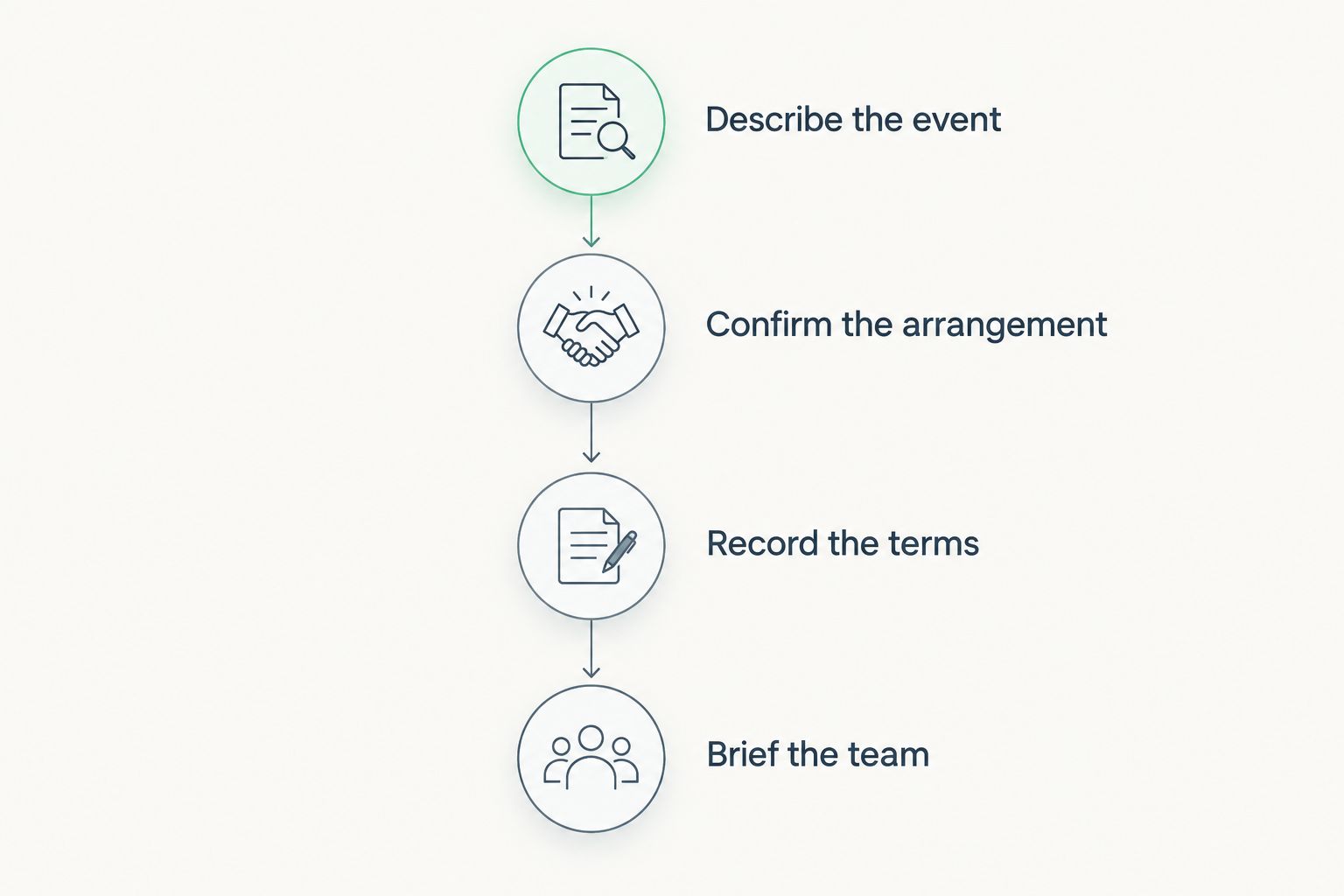
Use this sequence for a 2026 booking. It separates venue permission from legal authorization and turns a general conversation into an event-specific agreement.
1. Describe the event
Give the venue your event date, celebration type, expected attendance, and whether minors will attend. Explain whether you want a hosted bar, drinks purchased individually, or bottles supplied by you. Mention any admission charge or fundraising element rather than presenting the event only as a private party.
A useful inquiry describes what guests will actually experience. Asking whether alcohol is allowed without explaining how it will be supplied and served leaves the central question unanswered.
2. Confirm the arrangement
Ask who will supply and serve the alcohol and what license or permit authority applies. If an outside provider is involved, have that provider and the venue confirm the same arrangement. Use the New York State Liquor Authority's current licensing and permit guidance to check questions that remain unresolved.
Do not substitute a bartender's business card or insurance certificate for confirmation of alcohol authorization. Those documents address different issues.
3. Record the terms
Put the approved beverage arrangement in the event agreement or a written attachment. Include outside-bottle rules, service locations, service hours, age-check responsibilities, and who can stop service. If a detail changes, update the written plan instead of relying on a separate verbal conversation.
The goal is not a longer contract. It is a clear record that your host, venue manager, and beverage provider can all follow.
4. Brief the team
Give the final plan to the people handling entry, beverages, catering, and event management. Confirm who receives questions during the celebration and who handles a guest attempting to bring outside alcohol. Your guests should not become the messengers between providers.
What should your written alcohol agreement cover?
A written yes needs a defined scope. For a 2026 event, ask the venue to record what it has approved rather than relying on a broad statement that alcohol is permitted.
Your agreement should identify:
- The party responsible for supplying and serving alcohol.
- The approved beverages and whether outside bottles are prohibited.
- The rooms or areas where service will take place.
- The agreed service start and finish times.
- Responsibility for checking identification and refusing service.
- Any required insurance documentation and who must provide it.
- Procedures for delivery, storage, cleanup, and leftover bottles.
Keep insurance questions separate from permission questions. Insurance does not replace a required license or permit, and a license does not answer every contractual insurance requirement.
Also ask how changes are approved. Adding spirits, moving the bar outdoors, or switching beverage providers changes the plan that was originally reviewed. Obtain confirmation before treating a revised arrangement as accepted.
Can guests bring their own alcohol to a private venue?
Guests should bring alcohol only after the venue has explicitly approved the arrangement and the applicable legal requirements have been confirmed. A host's permission does not override the venue's rules. BYOB is not a universal exception to New York alcohol regulation.
Distinguish between host-supplied bottles and individual guests arriving with drinks. Those are different operating plans, even when both are casually called BYOB. Tell guests the final rule in advance and ask the venue how unapproved bottles will be handled at entry.
Can you serve alcohol when children attend the party?
Adults can attend an event with alcohol alongside children, but alcohol must not be served to guests under 21 years old. New York also prohibits furnishing alcohol to visibly intoxicated people. Build those restrictions into the service plan rather than relying on guests to manage themselves.
For a family celebration, ask who checks identification and controls access to drinks. Keep alcoholic and nonalcoholic beverages clearly distinguishable, and avoid leaving alcohol where guests can serve themselves without the agreed supervision.
Does a private party need a liquor license?
A private guest list does not, by itself, determine whether a license or permit is required. The answer depends on the premises and how alcohol is supplied, served, or sold. Ask the venue and the New York State Liquor Authority to confirm the requirements for your actual arrangement.
Do not assume that calling drinks complimentary resolves the issue. If alcohol is connected to tickets, admission, donations, or another payment, describe that structure accurately when seeking guidance. A label does not replace review of the transaction.
Where a Long Island venue inquiry fits
Longislandprivateevents is best suited to hosts seeking private-party venue services on Long Island. The company operates Cancun Long Island, a private party and banquet venue. Use the venue inquiry to establish whether your proposed celebration and alcohol arrangement fit together before committing.
The benefit of discussing the room and beverage plan together is a single, event-specific brief. The limitation is equally important: private-party hosting does not itself confirm a particular alcohol package, outside-bottle policy, or license scope. Request those terms directly.
For a 2026 inquiry, include the guest mix, desired beverages, proposed server, and any outside caterer. This gives Longislandprivateevents the event details needed to address your request without turning assumptions into booking terms.
Confirm your party arrangements
Discuss your event, guest mix, and proposed alcohol service before committing to a venue.
FAQ
Can you have alcohol at a private party venue on Long Island in 2026?
Yes, when the venue approves the arrangement and alcohol service complies with New York law. Confirm who supplies and serves the drinks and what license or permit authority covers the event.
Can I bring my own wine to a Long Island party hall?
Bring your own wine only after the venue approves it and the applicable legal requirements are confirmed. Permission to rent the room does not automatically include permission to bring outside bottles.
Does hiring a bartender make alcohol service legal?
No, hiring a bartender does not by itself establish legal authorization for alcohol service. Confirm the license or permit arrangement for the specific premises and event.
Can adults drink at a party where teenagers are present?
Adults can attend an event with alcohol alongside teenagers, but guests under 21 years old must not be served alcohol. Agree on identification checks and control of access to drinks before the event.
Is an open bar different from BYOB?
Yes, an open bar describes a service arrangement, while BYOB means alcohol is brought from outside. Neither term establishes legal authorization or tells you everything included in the venue agreement.
Can I sell drinks at a private fundraiser?
Do not sell drinks without confirming the required license or permit authority. Explain the full payment structure, including tickets, admission, and donations, to the venue and the New York State Liquor Authority.
What should I ask before booking a venue with alcohol?
Ask who supplies and serves alcohol, what authorization applies, and whether outside bottles are allowed. Record service areas, service hours, age-check responsibilities, and insurance requirements in writing.
One last thing
A toast is still alcohol service. If your plan is only a champagne toast rather than a full bar, describe it explicitly when asking for approval. A small role in the celebration does not remove the need to confirm the venue's rules and applicable authorization.
Before invitations go out, make sure the host, venue, and beverage provider can give the same answer about what will be served and by whom. That final check is more useful than a general promise that alcohol is allowed.