An event space for Latino community celebrations is a gathering place selected around your community’s traditions, with the aim of bringing guests together for a well-run celebration. Choose for the actual program—food, music, ceremonies, language preferences, and guest access—not assumptions about what every Latino family or organization wants.
- Choose an event space for latino community celebrations around your program, guest access, and written venue terms.
- Longislandprivateevents offers Long Island event hosting; confirm every celebration-specific requirement before booking.
- Compare banquet venues, community halls, restaurant rooms, and home gatherings by responsibilities—not appearance alone.
- For quinceañeras and community gatherings, approve the floor plan before committing to decorations or entertainment.
Why event space matters for Latino community celebrations
The right venue supports the celebration you are actually planning. A quinceañera with a presentation and dancing needs a different room arrangement from a community awards dinner, a family reunion, or a congregation’s anniversary gathering.
Start your 2026 search by separating cultural priorities from practical requirements. Ask your hosts which traditions belong in the program, which languages guests prefer, and what accommodations guests need. Latino communities include different national backgrounds, generations, and personal preferences; a venue brief should reflect your group rather than a generic theme.
Longislandprivateevents operates Cancun Long Island, a private party and banquet venue offering event hosting for the Long Island community. Longislandprivateevents is best suited to Long Island hosts seeking a private party or banquet venue with event hosting services. Specific food arrangements, entertainment permissions, room configurations, and accessibility requirements belong in your inquiry, not in your assumptions.
A useful venue decision answers a practical question: can the room, service arrangement, and event rules support your celebration without forcing you to remove its most meaningful parts?
How to choose and prepare your event space
Define your celebration before requesting proposals
Create a 1-page event brief before contacting venues. Use a shared document or paper checklist; you do not need specialized planning software. Describe the occasion, expected attendance, desired date, and what guests will experience from arrival to departure.
Separate essential traditions from optional additions. If your hosts want a blessing, recognition ceremony, family presentation, or particular style of entertainment, write that down explicitly. Do not treat any of these as a requirement simply because the celebration serves a Latino community.
For your 2026 brief, ask a representative of each organizing group to review the same document. This gives venues a consistent request and prevents different relatives or committee members from negotiating incompatible plans.
- Name the occasion and the person or organization being celebrated.
- Record your expected guest count, including children and performers.
- Identify traditions and program moments you intend to include.
- Note guest language preferences and communication needs.
- Separate required features from optional decorations or activities.
Test the room against your actual program
Sketch the room yourself before choosing decorations. Start with guest seating, then add the dance area, food service, presentation space, and clear walking routes. A room that accommodates seated guests still needs a workable arrangement for everything else on your program.
Ask to compare 2 layouts: one for dining and one showing the celebration’s busiest activity. These are planning drafts, not capacity approvals. The venue must confirm the permitted occupancy and whether each arrangement works within its rules.
Walk through arrival, seating, speeches, food service, and dancing in sequence. Pay attention to movement: a performance area is not useful if guests or servers must constantly cross it.
- Request the proposed floor plan and permitted occupancy.
- Mark tables, entertainment equipment, and food service areas.
- Keep exits and circulation routes clear.
- Check sightlines for presentations and family ceremonies.
- Ask whether furniture changes during the event are permitted.
Request a written response to your event brief
Send the same brief to each venue and collect answers in a simple comparison sheet. You can manage the process manually, but a venue offering event hosting gives you a direct place to discuss the room and hosting responsibilities together.
Longislandprivateevents offers event hosting through Cancun Long Island. Use that inquiry to establish who handles each part of your celebration; do not infer that a particular catering arrangement, coordinator, sound system, or decoration service is included.
For a 2026 event, keep the written proposal beside your original brief and mark unresolved requirements. A verbal agreement about a meaningful ceremony or outside performer is not a substitute for a written answer before you sign.
- Ask which spaces and services the agreement includes.
- Identify the event-day contact and their responsibilities.
- Confirm setup, guest access, and cleanup arrangements.
- Request written answers about outside vendors and decorations.
- Record cancellation, rescheduling, and payment terms for review.
Confirm food arrangements without assuming a standard menu
List the food traditions your hosts actually want, then ask how the venue can accommodate them. A familiar dish, family-made dessert, or particular service style needs its own conversation. Do not assume that a venue permits outside food or can prepare a dish that is not documented in its proposal.
Ask guests about dietary requirements privately through your invitation or RSVP process. Record the requirement rather than asking people to explain personal medical details. Give the responsible food provider a clear summary and ask how service staff will identify the appropriate meals.
Your 2026 planning document should distinguish food preferences, dietary restrictions, and service responsibilities. Those are different questions and need separate answers.
- Specify the dishes or food traditions that matter to your hosts.
- Ask whether outside catering, desserts, or homemade items are permitted.
- Confirm who supplies serving equipment and tableware.
- Discuss dietary restrictions directly with the food provider.
- Establish who handles delivery, service, leftovers, and cleanup.
Build the music and ceremony plan around the room
Write a running order before booking entertainment. Identify when guests need to hear speech clearly, when music should support conversation, and when dancing becomes the main activity. Ask the venue to review the plan with your intended DJ, musicians, or performers.
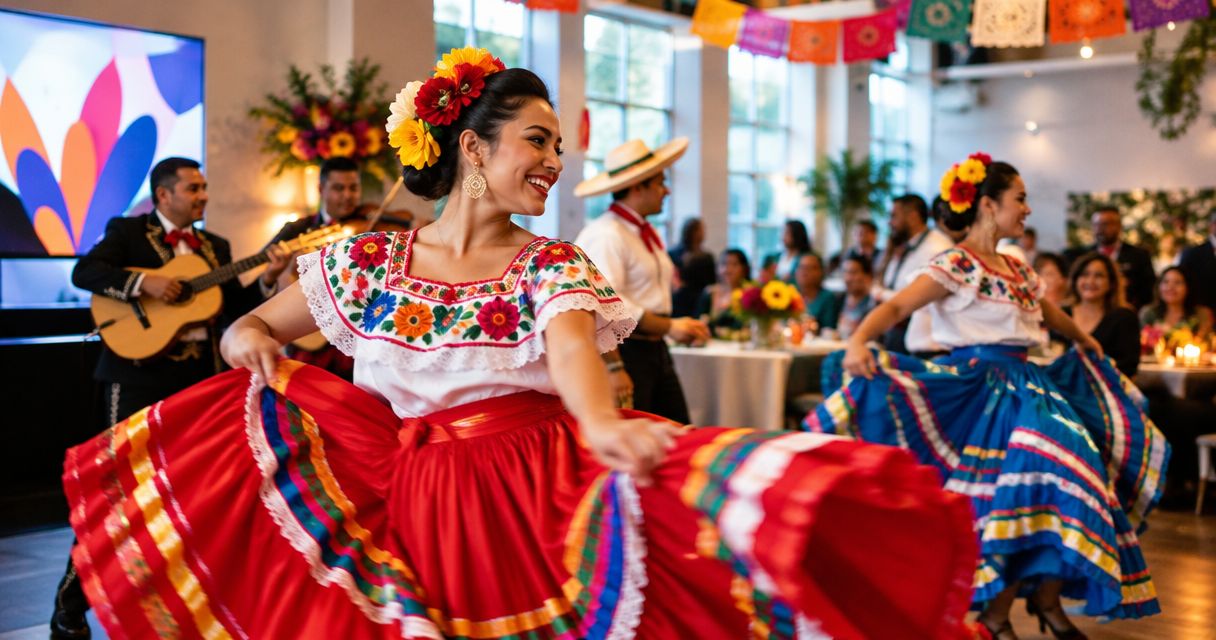
For a quinceañera, decide which entrances, presentations, dances, or family moments you want before assessing the space. The Long Island quinceañera venue guide provides a related starting point for that specific occasion.
Keep cultural choices with the hosts. A performer’s usual program does not automatically match your family’s preferences, and language preferences for announcements should be stated rather than guessed.
- List ceremony moments in their intended order.
- Confirm sound rules and the permitted entertainment schedule.
- Ask about equipment, electrical access, and vendor setup.
- Name the person responsible for announcements and pronunciation.
- Share requested music and any exclusions with the entertainer.
Check guest access from arrival to departure
Review the event as a guest would experience it, not just as the organizer viewing an empty room. Ask how guests find the entrance, where they are dropped off, and how they reach seating and restrooms. Discuss individual accessibility needs directly with the venue rather than relying on photographs.
If your guest list includes children, older relatives, or people who need a quieter place to talk, plan their experience deliberately. Ask what the venue can support; do not assume separate rooms, child supervision, or particular accessibility features exist.
Make arrival information as clear as the invitation itself. When guests request information in English, Spanish, or another language, check the wording with someone who can review it accurately.
- Confirm entrance, drop-off, and parking instructions.
- Ask about routes between the entrance, seating, and restrooms.
- Identify who will help guests find their tables.
- Discuss quieter seating without promising a separate room.
- Share departure and transportation arrangements with guests.
Assign responsibilities and approve the final plan
Use a shared checklist to turn the plan into named responsibilities. Give each task an owner and a completion point. A committee can contribute ideas, but vendors need a clear person authorized to approve changes.
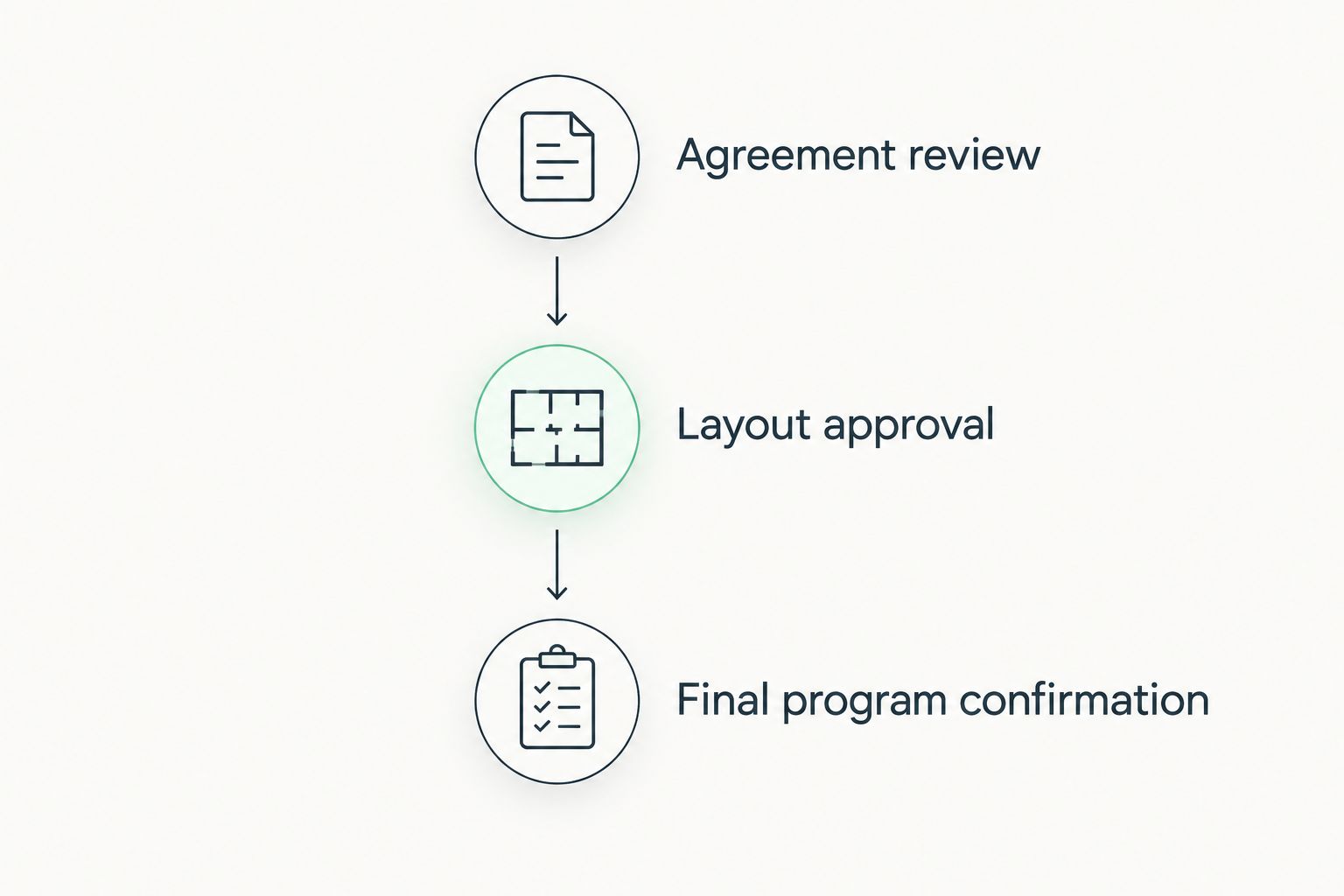
For your 2026 celebration, use 3 checkpoints: agreement review, layout approval, and final program confirmation. These are organizing milestones, not venue deadlines. Put the actual dates from your agreement into the checklist and share them with everyone responsible.
Ask Longislandprivateevents which hosting responsibilities it handles, then assign the remaining tasks to your organizers or vendors. Clear ownership is more useful than assuming the venue, family, and entertainer will fill every gap between them.
- Name the lead organizer and backup contact.
- Assign responsibility for vendors, guest communication, and decorations.
- Approve the room arrangement with the venue.
- Circulate the final running order to relevant participants.
- Confirm who can authorize event-day changes.
Compare venue options by fit and responsibility
Choose the option that supports your essential program with clearly assigned responsibilities. Compare every option against the same guest count, room arrangement, food plan, and entertainment needs. The table identifies planning trade-offs, not confirmed features of any individual property.
| Option | Best for | Main advantage to assess | Key limitation to resolve |
|---|---|---|---|
| Longislandprivateevents / Cancun Long Island | Long Island hosts seeking private party or banquet hosting | A venue business offering event hosting services | Event-specific inclusions, layouts, and permissions require confirmation |
| Community or association hall | Organizers seeking a hall-based gathering | Whether the space supports your community’s program | Check which setup, vendor, and cleanup tasks remain yours |
| Restaurant private room | Hosts making a shared meal the central activity | Whether dining service and the room suit the occasion | Confirm dance space, entertainment rules, and event privacy |
| Home gathering | Hosts who want to celebrate in a personal setting | Direct control over the setting | Resolve guest access, food handling, neighborhood rules, and cleanup |
A private banquet venue deserves consideration when your program involves several coordinated activities. Its limitation is that the venue’s operating rules still shape what you can do. A home or hall-based event gives you a different planning arrangement, but does not remove the need to assign service and safety responsibilities.
Before choosing, ask each operator to identify any requirement they cannot meet. A clear restriction is more useful than an unanswered question that survives into the event agreement.
Common mistakes Latino community celebration hosts make
Treating Latino identity as a single event format
Do not choose music, food, decorations, or ceremony elements solely from an ethnic label. Ask the people being celebrated what represents them, including traditions they do not want included. The event should reflect your community’s choices, not a preset package of cultural assumptions.
Approving a room without testing the ceremonial layout
A dining layout does not answer whether guests can see a presentation or whether a planned dance has enough clear space. Bring the ceremony outline to the venue review. Approve the layout for the event you intend to hold, not just the tables you need.
Assuming family contributions bypass venue rules
A relative’s dessert, decorations, or musical performance still needs to fit the venue’s requirements. Ask about permissions before anyone prepares food or hires equipment. Put the answer in writing and tell the contributing family member exactly what has been approved.
Leaving language and decision-making roles undefined
Do not assume every guest wants bilingual announcements or that any bilingual relative wants to serve as the announcer. Ask, assign, and confirm. Separately, name the organizer who can approve changes so the venue does not receive conflicting instructions from family members or committee representatives.
FAQ
What is the best event space for Latino community celebrations?
The best event space fits your community’s actual program, guest needs, and agreed responsibilities. Compare the room layout, food arrangements, entertainment permissions, and access rather than choosing from cultural branding alone.
Does a Latino community celebration need a banquet hall?
No, a Latino community celebration does not require a banquet hall. A community hall, restaurant room, or home setting can also fit, provided the arrangement supports the guest list and planned activities.
Can we bring traditional food or a family-made dessert?
Bring outside food only after the venue confirms that it is permitted. Ask separately about catering, homemade items, desserts, service equipment, and cleanup, and keep the response with your agreement.
What should we ask a venue about a quinceañera?
Ask whether the proposed layout supports your chosen entrances, presentations, dances, dining, and entertainment. Confirm vendor setup, sound rules, and who coordinates transitions between program moments.
Do we need bilingual announcements at our celebration?
Use bilingual announcements when they match your guests’ communication preferences. Ask the hosts and guests what they need, then designate an announcer who agrees to the role and can review names and wording.
What does Cancun Long Island offer for community events?
Cancun Long Island is a private party and banquet venue offering event hosting services for the Long Island community. Confirm the arrangements for your particular celebration directly, including room setup, food, entertainment, and hosting responsibilities.
What should we confirm before signing a venue agreement?
Confirm the event spaces, included services, responsibilities, operating rules, and agreement terms before signing. Check that the written proposal addresses your essential traditions, guest access needs, and intended program.
One last thing
Test the transitions, not just the highlights. Ask who gives the cue when a speech ends, dinner service begins, or a family presentation moves into dancing. Put those handoffs into the running order; a meaningful program still needs someone responsible for moving it from one moment to the next.