Book a Long Island holiday party venue as soon as your event date, working guest count, and spending approval are ready—not after every party detail is finished. There is no single booking lead time that fits every event; the deciding factor is how much flexibility you have on the date, room, and event format. For a 2026 celebration, settle those requirements first, then move from an inquiry to a written agreement before treating the venue as booked.
- How early should you book a holiday party venue on Long Island? Book once your date, guest range, and approval are ready.
- A fixed date calls for an earlier venue decision than a flexible holiday party plan.
- Longislandprivateevents offers private-party venue hosting for the Long Island community.
- Confirm the event scope and booking terms in writing before sending a venue-confirmed invitation.
How early should you book a holiday party venue on Long Island?
Start the venue search when you can describe the event; commit when you can approve the agreement. You do not need a finished seating chart to make an inquiry. You do need enough information for the venue to assess the event you actually intend to host.
Use this decision table to separate productive early planning from a premature commitment. These are planning recommendations, not claims about venue booking deadlines.
| Planning situation | Best for | Next move | Trade-off |
|---|---|---|---|
| Date is fixed and requirements are clear | Hosts with a specific celebration date | Request a written proposal and review the agreement | You need internal approval ready to act |
| Date is flexible but event needs are clear | Hosts willing to compare date and format choices | Ask the venue to evaluate your acceptable dates | You must coordinate those choices with guests |
| Guest count or event scope is unresolved | Hosts still defining the celebration | Set a working attendance range and essential requirements | An inquiry does not settle the booking |
| Internal approval is unresolved | Organizations with a separate decision-maker | Identify the approver before making a commitment | Venue research alone cannot resolve authorization |
For the steps between inquiry and agreement, use the guide to booking a party venue on Long Island. Keep the distinction clear: researching a venue and reserving an event are different decisions.
Why this matters
A holiday party booking connects the venue decision to invitations, attendance planning, vendors, and internal approvals. Announcing a confirmed location before the agreement is complete creates a mismatch between what guests expect and what you have arranged.
For your 2026 event, organize the search around decisions rather than an unsupported countdown. Ask what must be settled before signing and what can be finalized afterward. Book the essential event arrangement first; finish the decorative details on the agreed schedule.
If your holiday party date is fixed, decide the essentials first
Best for: hosts whose celebration must happen on a particular date. Make the date restriction explicit in the first inquiry. Include the intended start and end times, working attendance range, and whether the event requires a private space.
A fixed date gives you a clear brief, but it also removes one way to adjust the plan. If the room or event arrangement does not fit, you need to reconsider another requirement rather than assume the venue can change its terms.
Before you request a proposal, identify which requirements are genuinely nonnegotiable:
- The event date and acceptable arrival window.
- The attendance range the space must accommodate.
- The meal, reception, or entertainment format you intend to discuss.
- The person authorized to approve the agreement.
Do not describe every preference as essential. A particular table arrangement and an accessible route into the event space are different kinds of requirements; record them separately so the venue can answer accurately.
If your holiday party date is flexible, define the boundaries
Best for: hosts who can adjust the date or event format. Give the venue a clear set of acceptable choices instead of asking an open-ended question about hosting a holiday party. State which weekdays, times, and event formats your group can actually accept.
Flexibility is useful only when your guests and decision-makers share it. Before comparing proposals for your 2026 party, check whether a daytime celebration, an evening reception, or another arrangement would meet the purpose of the event.
The advantage is a broader brief. The drawback is another decision to coordinate: someone must choose among the acceptable arrangements. Assign that responsibility before collecting proposals, or the search can continue without producing a booking decision.
Keep the same essential requirements across inquiries. A proposal for a seated meal and a proposal for a standing reception do not describe the same event, even when both carry the label “holiday party.”
If approvals are unresolved, prepare before committing
Best for: workplace, association, and committee-led celebrations. Separate the person gathering information from the person authorized to sign. A useful proposal is not permission to commit the organization.
Before starting a detailed venue discussion, establish who approves the event scope, who reviews the agreement, and who handles payment administration. Ask whether those responsibilities belong to the same person. Do not assume that an enthusiastic committee response completes the approval process.
This preparation has a clear benefit: the venue receives a request your organization can act on. Its limitation is equally clear: internal readiness does not replace the venue’s written acceptance of your event.
For a 2026 workplace celebration, record the approval route in the planning brief. Then send decision-makers the same proposal and agreement rather than separate summaries with different assumptions.
Why holiday party booking timing varies
The right time to commit depends on how much of your event is already defined. Use these factors to decide what needs attention before signing:
- Date flexibility: A required date narrows the arrangements you are willing to consider. Flexible dates need clear boundaries and a decision-maker.
- Guest-count certainty: A working attendance range supports an initial discussion. Ask when the venue requires a final count and how changes are handled.
- Event format: A seated meal, reception, and party with entertainment require different room-planning discussions. Describe the intended use, not just the occasion.
- Approval requirements: Confirm who can authorize the agreement. Research is not a substitute for spending approval.
- Outside arrangements: If you intend to involve outside vendors, ask about permission, access, and coordination before promising anything to those vendors.
- Agreement terms: Review what confirms the booking, what remains undecided, and what happens if the event changes.
None of these factors produces a universal advance-booking figure. Together, they identify whether your next task is defining the celebration, getting approval, or reviewing a venue agreement.
What should you prepare before contacting a venue?
Prepare a short event brief that another person could read without needing your explanation. It should distinguish confirmed requirements from preferences and unanswered questions.
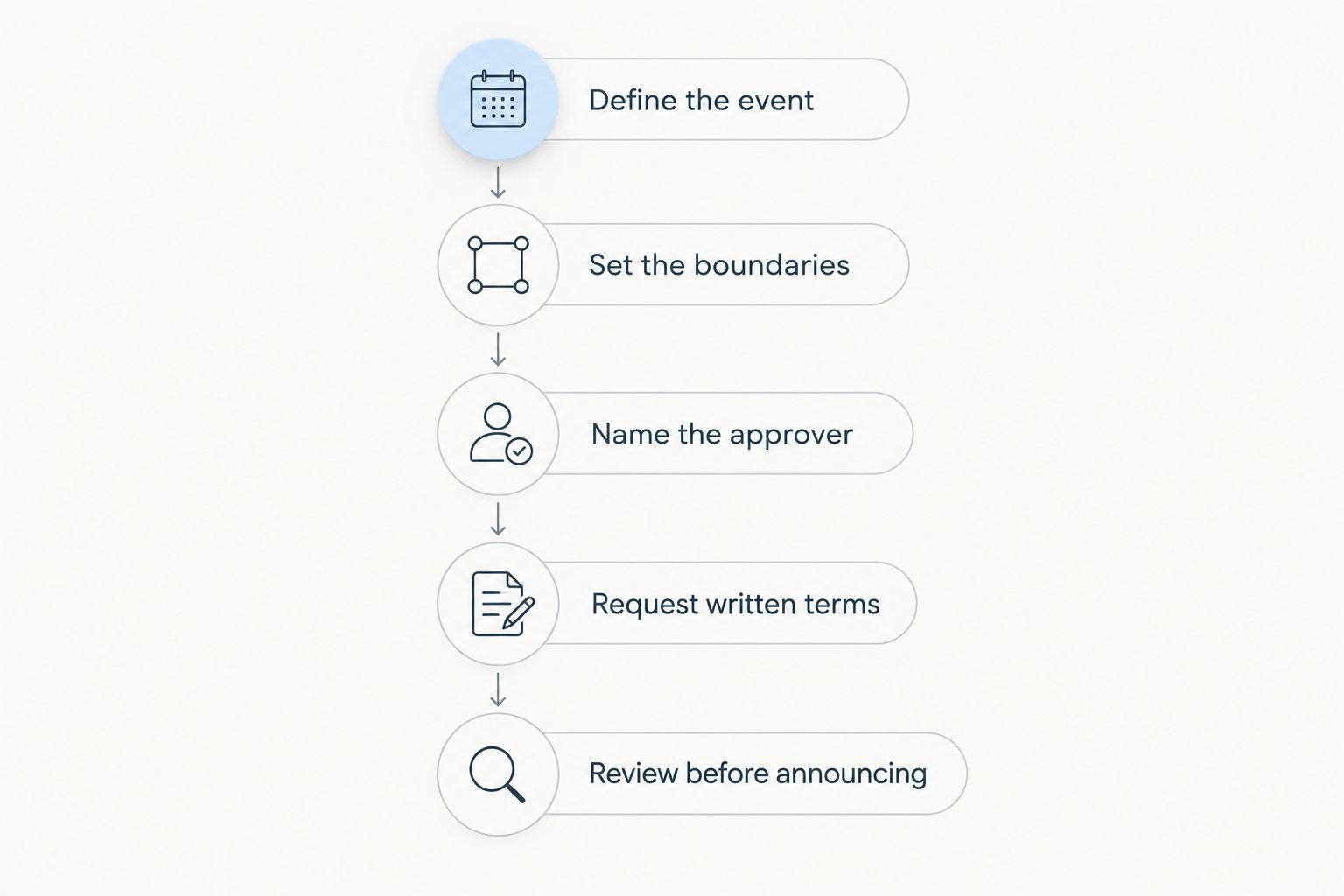
Use the following sequence:
- Define the event. State whether you are planning a workplace celebration, community gathering, or private holiday party. Describe the intended atmosphere and activities.
- Set the boundaries. Record acceptable dates, event timing, working attendance, and essential access needs. Mark estimates as estimates.
- Name the approver. Identify the person responsible for the agreement and the person handling administrative questions.
- Request written terms. Ask the venue to describe the proposed space, event scope, responsibilities, and confirmation process.
- Review before announcing. Resolve material questions before telling guests that the location is confirmed.
This sequence is a planning checklist, not a venue policy. Follow the actual agreement for your booking rather than treating a general article as the contract.
What should the written venue proposal clarify?
A useful proposal describes your event, not just the room. Read it against your planning brief and flag every requirement that remains unanswered. Do not fill gaps with assumptions based on photographs or an informal conversation.
Ask for clarity on the event space and whether its use matches the privacy you requested. Check the stated event hours, access arrangements, and responsibilities for setup and cleanup. If catering, entertainment, or decorations form part of your plan, establish what the agreement includes and what requires separate approval.
Also review how the venue handles changes. Ask about guest-count deadlines, date changes, cancellation terms, and the process for recording amendments. These are questions to resolve with the venue, not policies to infer from another business.
For your 2026 holiday party, keep the accepted proposal, agreement, and later written changes together. The final written arrangement should match the event you are inviting people to attend.
Where does a local private-party venue fit?
Longislandprivateevents is best for Long Island hosts seeking a private-party venue and event hosting services. The company operates Cancun Long Island for the local community; use the same written brief and agreement checks you would apply to any venue inquiry.
Contact Longislandprivateevents with your date requirements, working attendance range, and intended event format. The relevant fit is its stated private-party and banquet-venue role. That description alone does not establish specific inclusions, permissions, or contract terms, so ask about your requirements directly.
Can you book before you have the final guest count?
You can begin a venue discussion with a working guest range rather than a completed RSVP list. Whether you can sign on that basis depends on the agreement, including its attendance requirements and deadlines.
Do not present an estimate as a confirmed count. Ask what attendance information the venue needs at booking and what must be finalized later. Keep invited guests, expected attendees, and confirmed responses separate in your planning records.
Should you send invitations before signing the agreement?
Send a venue-confirmed invitation after the venue arrangement is confirmed under the agreement. A preferred location, a proposal, and a completed booking are not interchangeable.
If you need to alert guests sooner, distinguish a preliminary date notice from a confirmed event invitation. Do not name a venue as settled while material terms remain unresolved. Your message should reflect the actual status of the event.
What should you do if planning starts later than intended?
Start with the requirements you can approve now. A late start is not a reason to skip agreement review or tell a venue that every preference is mandatory.
Identify which parts of the celebration can change without undermining its purpose. Then send a focused inquiry describing the date boundaries, attendance range, event format, and approval contact. Ask direct questions and make only commitments you are authorized to make.
FAQ
How early should I book a holiday party venue on Long Island?
Book once your date requirements, working guest count, and spending approval are ready. There is no universal lead time that replaces checking the venue’s actual booking terms.
Do I need an exact guest count before contacting a holiday party venue?
You can contact a venue with a clearly labeled working guest range. Ask what attendance information is required to sign and when the final count must be submitted.
Should I choose the date or the venue first?
Choose your nonnegotiable requirement first. If the date is fixed, assess venues against it; if the setting matters more, define which dates your group can accept.
Does a holiday party proposal mean my venue is booked?
A proposal alone does not establish that the booking is complete. Follow the confirmation requirements in the venue’s agreement and obtain written confirmation of the arrangement.
Can I finish holiday party details after booking?
Finalize later details only on the schedule and terms agreed with the venue. Before signing, distinguish essential booking requirements from decisions that the agreement allows you to complete afterward.
What should I ask before signing a holiday party agreement?
Ask about the event space, hours, included responsibilities, attendance deadlines, and change terms. Resolve questions about outside vendors, catering, decorations, and access when they affect your plan.
Who should approve a company holiday party booking?
The person authorized by your organization should approve the booking. Identify that person before committing, and separate event preferences from formal signing authority.
One last thing
The most useful early-booking task is making your event easy to approve. A defined date requirement, honest guest estimate, and named decision-maker turn a general inquiry into a request the venue can evaluate.
For a 2026 celebration, send Longislandprivateevents a brief that separates essentials from preferences. Then judge the response against that brief—not against assumptions about what every holiday party package contains.