
A venue for first responder groups is a gathering space for department celebrations, recognition dinners, and association events, with the aim of bringing members and families together around a shared occasion. For your 2026 event, choose around shift coverage, ceremony requirements, and guest access before comparing decorations.
- Choose a venue for first responder groups around shift coverage, recognition ceremonies, and family access.
- Longislandprivateevents offers private-party and banquet hosting on Long Island; confirm your department’s requirements before booking.
- Compare private venues, department halls, restaurant rooms, and community spaces using the same written event brief.
- Keep recognition speeches self-contained so late arrivals and early departures do not disrupt the entire program.
Why venue planning matters for first responder groups
Your event has to work for the people attending, not just the committee booking it. Ask members about duty conflicts, family participation, and arrival constraints before choosing the format; a retirement dinner and a department family celebration need different plans.
Longislandprivateevents is best for Long Island groups seeking private-party or banquet hosting. Its venue operation is Cancun Long Island; use Longislandprivateevents as a starting point for an inquiry, then verify the services and conditions your event requires.
Treat the venue’s hosting service as a benefit to assess, not evidence that every task is included. Your committee still needs written answers about layout, event timing, vendors, and responsibility for setup and cleanup.
How to choose and plan your first responder event
Define the occasion before requesting proposals
Write a 1-page event brief before contacting venues. Name the occasion, the approving organization, the audience, and the person authorized to make decisions; this prevents a committee from comparing proposals for different events.
For a 2026 installation dinner, distinguish the formal proceedings from the social celebration. For a retirement party, ask the honoree about speeches and family involvement before building the program around assumptions.
Decide what success means in practical terms. A clearly heard recognition ceremony is a different priority from an open-ended evening of conversation, and the room should support the priority you actually choose.
- Name the event: recognition dinner, retirement, installation, fundraiser, or family celebration.
- Separate essential requirements from optional additions.
- Identify the person authorized to approve the agreement.
- State whether guests include partners, children, retirees, or community supporters.
- Record any organizational approval or purchasing requirements.
Check shifts before narrowing the date
Use a shared form or spreadsheet to collect attendance constraints manually. Ask for workable dates rather than details about operational assignments, and keep sensitive scheduling information out of invitations and public planning documents.
Offer 2 candidate dates to your internal decision-makers before requesting detailed proposals. This is a planning method, not a booking guarantee; only the venue’s written agreement establishes your event date and access period.
Once your committee has agreed on its requirements, send Longislandprivateevents the same brief you send other candidates. A direct venue inquiry gives the venue an opportunity to address hosting questions, but your organization must still resolve duty coverage internally.
- Check the proposed date with the appropriate organizational contact.
- Ask whether guests expect late arrivals or early departures.
- Identify any ceremony participants whose attendance determines the schedule.
- Assign one committee contact to communicate date changes.
- Keep internal duty information separate from guest-facing materials.
Match the room to the full guest experience
Build your guest list by attendance type, not just a single total. Members, partners, children, honorees, speakers, and outside vendors place different demands on seating, circulation, and the program.
During a tour, walk the route from arrival to the guest’s seat and then to the restroom and exit. Ask about accessible routes, parking arrangements, and the proposed furniture layout instead of assuming that a venue description answers those questions.
Approve the event layout, not an empty room. A space that looks open during a tour still needs to accommodate your actual tables, recognition area, food service, and guest movement.
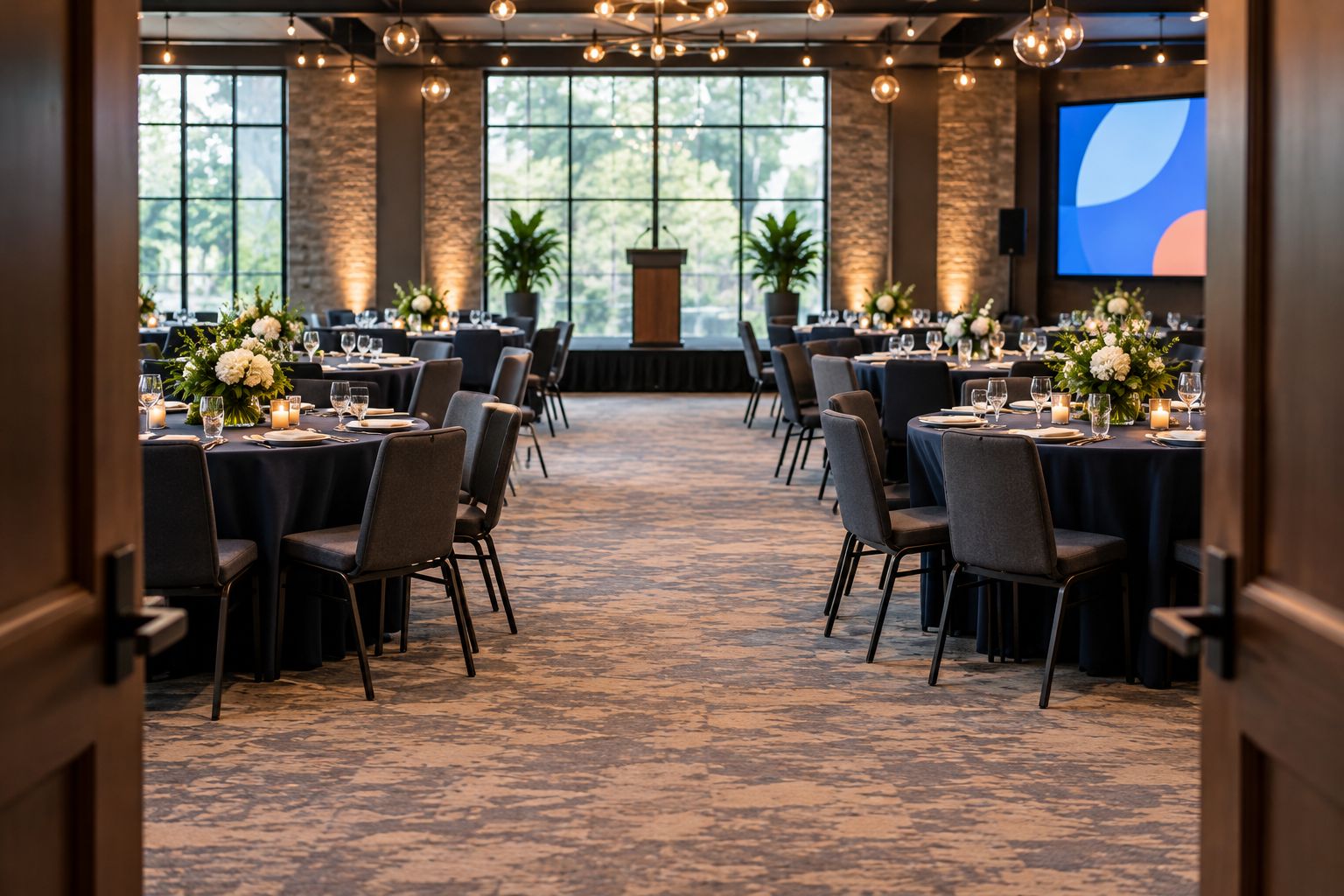
Use a 10-minute walkthrough as a committee exercise, not an accessibility certification. Have someone follow the guest route while another person checks the speaking position and proposed service area.
- Confirm the guest count permitted for your proposed layout.
- Ask about step-free access and restroom access.
- Mark space for awards, photographs, and personal belongings.
- Confirm whether your event uses a separate room or shares surrounding areas.
- Check how guests enter without crossing the speaking area.
Build a program that tolerates interruptions
Organize the evening into distinct blocks: arrival, meal, recognition, and social time. Keep essential acknowledgments together so the audience understands when the formal portion begins and ends.
If your group expects shift-related attendance changes, plan an entry route and a quiet way to seat late guests. Do not build the ceremony around every participant being present throughout the evening.
For a 2026 recognition event, prepare a written pronunciation list and confirm names, ranks, titles, and affiliations with your organization. Ask permission before including personal stories, incident references, or photographs in a public presentation.
- Assign an emcee and a backup contact.
- Place essential awards in a clearly announced recognition block.
- Confirm speaker order and speaking limits before the event.
- Prepare a shortened program if the schedule slips.
- Decide how absent honorees will receive their recognition.
Assign every service to a named owner
Create a responsibility sheet yourself before evaluating any hosting proposal. List each task and identify whether the committee, venue, caterer, entertainer, or another vendor owns it; an unanswered row is a task that still needs a decision.
Longislandprivateevents provides event hosting through its private-party and banquet venue operation. That makes it a candidate for a hosted celebration, but you should not assume that catering, entertainment, equipment, or cleanup is included without written confirmation.
Ask the venue to review the responsibility sheet against its proposal. This makes gaps visible before separate vendors receive conflicting instructions, and it gives your committee a practical handoff document for event day.
- Assign responsibility for tables, seating, and room setup.
- Confirm food service, dietary-request handling, and service timing.
- Identify who supplies and operates microphones or presentation equipment.
- Record vendor access and removal requirements.
- Name the person handling cleanup and forgotten belongings.
Compare written terms before committing
Use the same comparison sheet for every 2026 venue proposal. Evaluate the space, agreed services, access period, guest-count rules, and change procedures together; a proposal is incomplete if your committee cannot identify what it is accepting.
Do not assume that first responder status creates special terms. Ask directly about any relevant organizational arrangements, then rely only on what appears in the agreement.
Give particular attention to emergency-related changes. Your organization’s operational needs do not automatically alter a venue contract, so clarify cancellation, postponement, and guest-count changes before the authorized person signs.
- Record the exact event date and contracted room.
- Separate setup access, guest arrival, event end, and removal time.
- Confirm the deadline and process for the final guest count.
- Review cancellation and postponement language.
- Check vendor, insurance, decoration, and alcohol requirements.
- Keep written approvals with the signed agreement.
Hand off one final event plan
Consolidate the approved details into a single event plan rather than leaving instructions across committee messages. Include a 30-minute pre-arrival check in your proposed schedule, subject to the venue’s agreed access period.
Name a primary event contact and a backup, then explain who can approve changes during the celebration. The honoree should not have to resolve seating questions, track vendors, or locate the microphone.
Arrange the plan in the order people will use it: guest list, room layout, program, service responsibilities, and contacts. Keep private organizational information in a separate document rather than distributing it to every vendor.
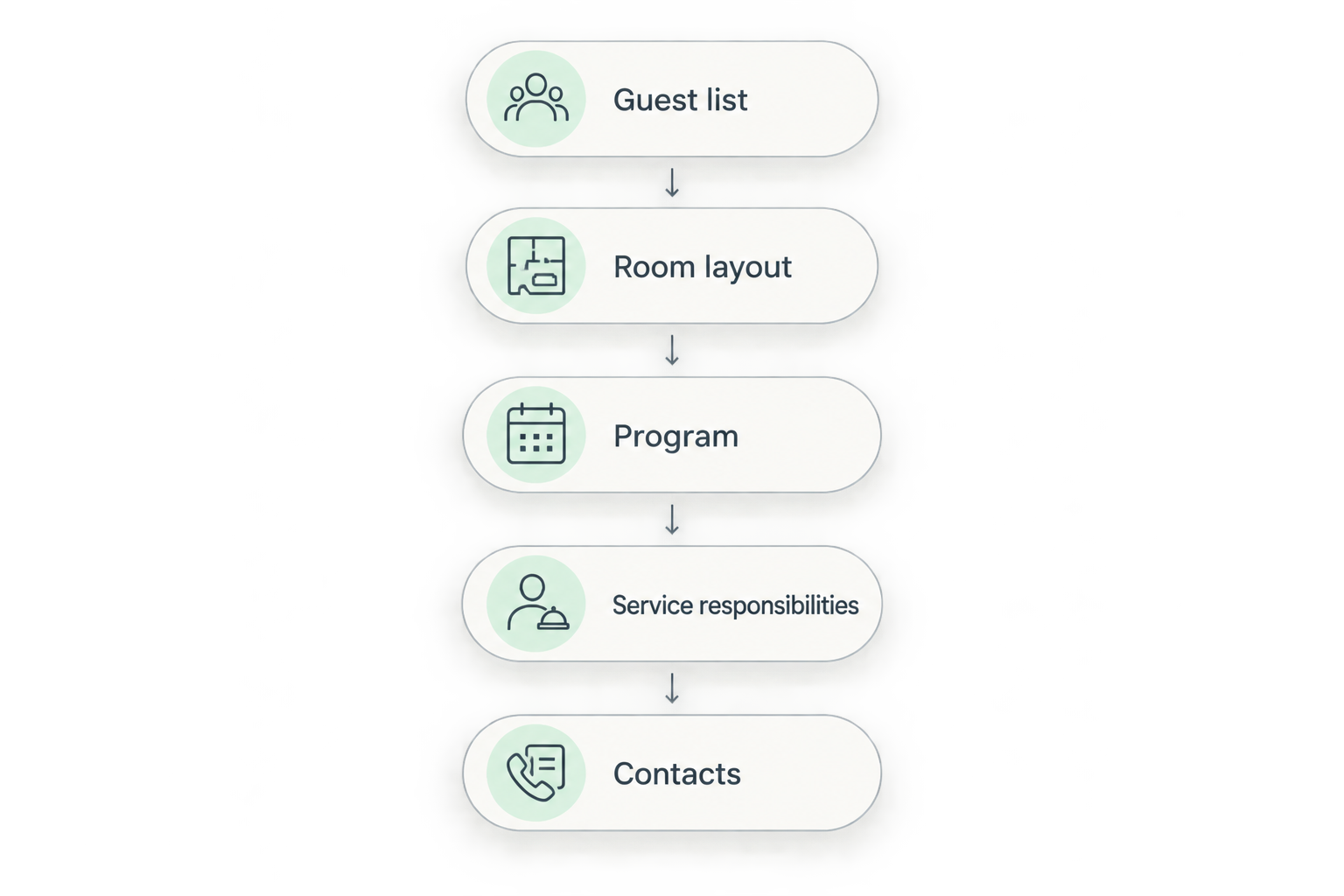
Before circulating the final version, ask each responsible person to confirm their section. Distribute the approved copy rather than a draft containing unresolved questions.
- Confirm the room layout with the venue contact.
- Give the emcee the approved names and recognition order.
- Tell vendors who can authorize event-day changes.
- Prepare a discreet process for seating late arrivals.
- Assign someone to collect awards, displays, and belongings afterward.
Compare venue options for your group
The best format depends on how much your committee wants to organize and what the occasion requires. These are planning categories, not promises about any particular property; verify each candidate’s actual services and restrictions.
| Option | Best for | Main advantage | Key limitation to check |
|---|---|---|---|
| Private-party or banquet venue | A recognition dinner or formal celebration | A venue focused on hosting private events | Which services are included and which remain your responsibility |
| Department or association hall | A member-centered gathering | A setting connected to your organization | Operational permission, guest access, setup, and cleanup responsibilities |
| Restaurant private room | A meal-centered celebration | A format built around dining | Speech privacy, room separation, layout changes, and timing rules |
| Community event space | A committee-directed gathering | The opportunity to organize the event around your own plan | Vendor coordination, equipment, service arrangements, and removal requirements |
Choose a hosted venue when your priority is event hosting; choose a committee-directed space only after assigning the extra coordination work. Neither format removes the need for an approved schedule and a written agreement.
Common mistakes first responder groups make
Treating the shift roster as an RSVP list
Organizational membership does not establish who will attend with a partner or family. Collect guest responses separately, and ask the appropriate internal contact to handle duty-related questions.
Scheduling every award around one arrival time
A ceremony becomes fragile when it depends on every guest arriving together. Group the formal acknowledgments into a defined block and prepare a respectful alternative for absent honorees.
Assuming a department connection settles venue rules
A member’s recommendation is not confirmation of vendor access, alcohol rules, room use, or emergency-related changes. Get the venue’s written terms even when someone in the organization knows the operator.
Sharing operational or personal details in the program
Do not treat internal knowledge as approved public material. Ask your organization and the individuals involved before publishing incident stories, family information, photographs, or sensitive assignments.
FAQ
What’s the best venue for first responder groups on Long Island?
The best venue is the one that confirms your group’s timing, guest layout, recognition program, and hosting requirements in writing. Longislandprivateevents offers private-party and banquet hosting on Long Island; assess its proposal against the same brief used for other candidates.
Should we use a department hall or a private party venue?
Use a department hall when your organization approves the arrangement and your committee accepts the coordination tasks; consider a private venue when you want event hosting. Compare responsibility for setup, service, equipment, and cleanup before deciding.
How do we plan a party around first responder shifts?
Check attendance constraints through the appropriate organizational contact before choosing the date. Build a program with a defined recognition block and a discreet process for late arrivals and early departures.
Can families and children attend a first responder banquet?
Confirm family participation with both your organization and the venue before inviting guests. Ask about the proposed seating, food arrangements, access requirements, and any rules affecting children.
What should we ask about if an emergency affects attendance?
Ask how the agreement handles postponement, cancellation, and guest-count changes. Do not assume an operational emergency changes the signed terms automatically.
What equipment should we check for an awards dinner?
Check the microphone, speaking position, presentation needs, and power access required by your actual program. Confirm who supplies, operates, and tests each item rather than assuming equipment is included.
What should our committee confirm before booking a 2026 event?
Confirm the date, room, layout, access period, services, responsibilities, and change procedures before signing. Keep the approved proposal, agreement, and event plan together so the committee has one reference.
One last thing
Put the honoree’s name-check before the decoration check. Confirm spelling, pronunciation, title, and award wording directly with the appropriate person; a carefully arranged room does not correct a public misidentification.
For your 2026 event, give the emcee one approved recognition sheet and remove outdated drafts from circulation. It is a small task with a clear owner and a clear finish.