The best time of year to book a Long Island venue is when your event date, guest estimate, and essential requirements are clear—not a particular calendar month. For a 2026 celebration, start your venue search before sending invitations, then commit only after the venue confirms your date, event hours, and booking terms in writing.
- For Long Island venues, booking readiness matters more than a supposedly ideal calendar month.
- What's the best time of year to book a Long Island venue? Before invitations, once your requirements are clear.
- Compare complete event arrangements, not seasons alone; confirm access, guest requirements, and written terms.
- Keep alternative dates only when your celebration and essential guests can accommodate them.
Why this matters
Choosing when to book and choosing when to celebrate are different decisions. You can search for a summer event during winter, but that does not establish winter as the best booking season for every host.
Start by matching your celebration to the right kind of private event hosting. Your booking decision should follow a workable event plan, not an unsupported promise that a particular month is always better.
A date alone is not a complete reservation. You also need agreement on the room, event schedule, responsibilities, and terms that apply if your plans change.
What's the best time of year to book a Long Island venue?
Book when you can describe the event clearly and evaluate a written agreement. If the date is fixed, begin asking venues about that date as soon as the event is confirmed; if the date is flexible, compare acceptable alternatives before choosing.
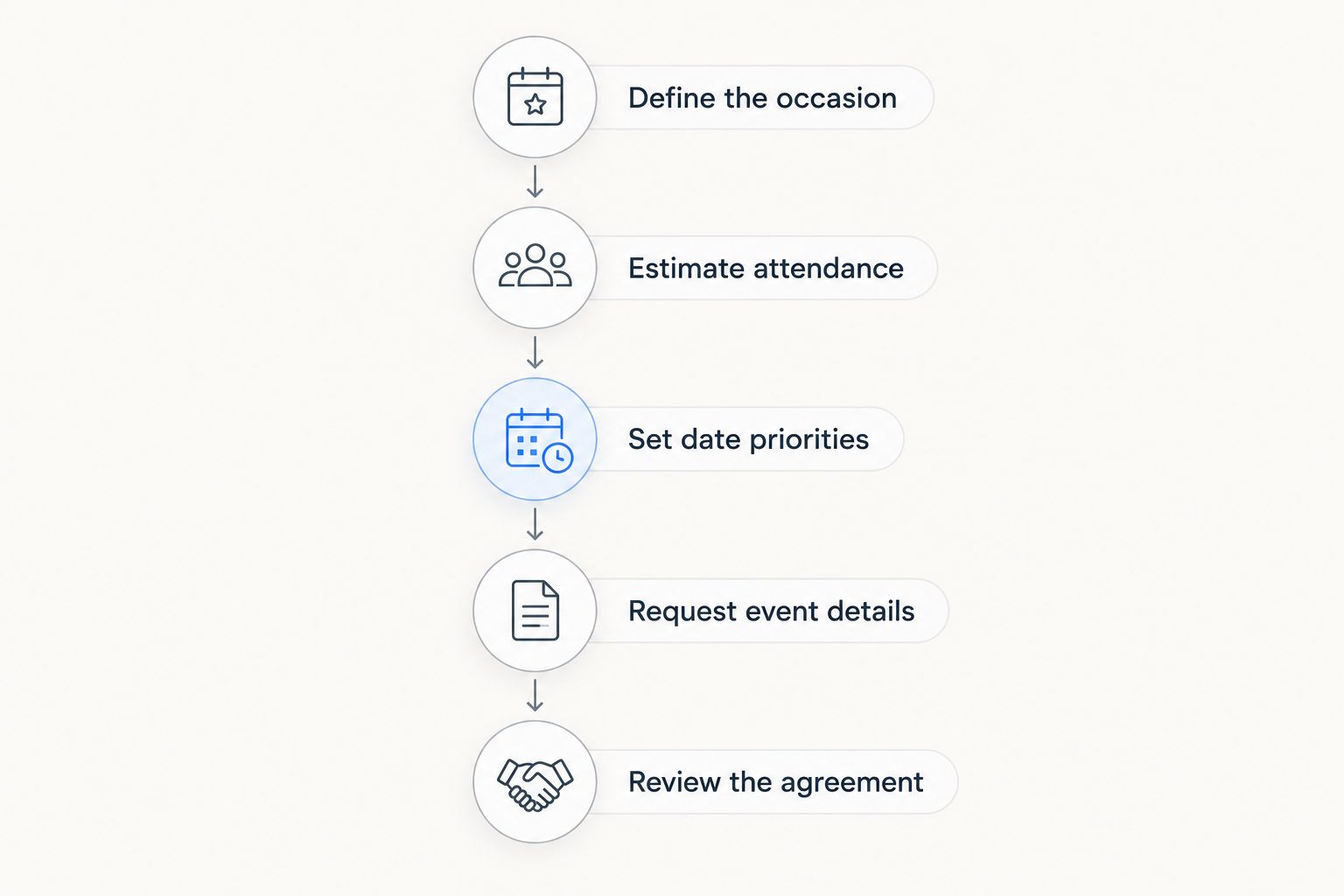
Use this sequence for a 2026 event rather than working backward from a generic seasonal rule:
- Define the occasion. Identify what you are hosting and whether another ceremony, school activity, or organizational calendar determines the date.
- Estimate attendance. Establish a working guest list so you can discuss the room and event arrangement meaningfully.
- Set date priorities. Separate your preferred date from alternatives you would genuinely accept.
- Request event details. Ask about the proposed space, event hours, access, included services, and host responsibilities.
- Review the agreement. Check the written terms before treating an inquiry or conversation as a confirmed booking.
For the steps between an initial inquiry and a reservation, use the guide to booking a party venue on Long Island.
The sequence matters because each decision changes the next question. A room discussion without a guest estimate is incomplete; a date discussion without access hours leaves your setup plan unresolved.
Fixed-date events: start with the calendar constraint
Best for: celebrations that must follow a specific ceremony, birthday, or organizational date. Begin with the date you cannot change, then ask venues to evaluate the full event rather than simply checking the calendar.
The advantage is a clear search brief. You can rule out arrangements that do not fit without repeatedly reconsidering your date.
The limitation is reduced flexibility. If your preferred arrangement does not work, you must decide whether the venue, event format, or timing matters most.
Tell each venue which requirements are essential. Distinguish the actual event date from preferences such as an evening start or a particular room arrangement, and do not describe a preference as mandatory unless it truly is.
Flexible-date events: compare complete alternatives
Best for: hosts who can choose among dates without disrupting the purpose of the celebration. Ask for alternatives that satisfy the same guest, schedule, and hosting requirements.
Flexibility gives you more arrangements to evaluate, but it also creates more decisions. Keep comparisons consistent: a different day with different access hours or responsibilities is not the same event moved on a calendar.
Before accepting an alternative, check it with the people whose attendance is essential. An appealing venue arrangement is not useful if the honoree, organizer, or required participants cannot attend.
Do not move your celebration solely because someone calls a month “off-season.” Establish what the proposed date changes in your actual agreement.
How should you compare spring, summer, fall, and winter?
Compare seasons against your event's needs, not a blanket ranking. The table below is a planning framework, not a claim about Long Island booking demand or any venue's calendar.
| Event season | Best for | Planning advantage | Trade-off to resolve |
|---|---|---|---|
| Spring | Hosts whose celebration belongs on a spring calendar | Keeps the event aligned with its occasion | Check conflicts with ceremonies, school activities, and essential guests |
| Summer | Hosts whose preferred event date falls during summer | Preserves the intended seasonal timing | Check guest travel plans before treating a date as workable |
| Fall | Hosts arranging an autumn celebration | Keeps the event on the intended calendar | Check school, work, and organizational commitments |
| Winter | Hosts planning a winter occasion or year-end gathering | Matches the celebration to its purpose | Review weather contingencies and holiday conflicts |
For a 2026 gathering, ask the same practical questions in every season: Can your essential guests attend? Does the event schedule work? What happens if a disruption requires a change?
If an outdoor element is essential, make its contingency part of the venue discussion. Do not infer an indoor backup, sheltered arrival area, or weather policy from photographs.
Seasonal preference is a valid reason to choose a date. It is not evidence that one month is universally the best month to sign a venue agreement.
Why the right booking time varies
The right point to commit depends on what is settled and what remains unresolved. Use these factors to decide whether you are ready to book:
- Date dependence. An event tied to another confirmed activity needs a venue schedule that fits that activity.
- Guest-list certainty. A working attendance estimate lets you discuss space and event requirements without pretending the final count is settled.
- Essential attendance. Confirm the people who must attend before committing to an alternative date.
- Event logistics. Setup, vendor access, guest arrival, and departure need to fit the proposed arrangement.
- Written terms. Understand confirmation, changes, cancellation, and host responsibilities before committing.
These factors give you a useful stopping rule. Book once the essential requirements fit and you understand the agreement; keep comparing when a core requirement remains unresolved.
Do not confuse an unanswered question with a minor detail. If access hours determine whether your decorations or outside services can be ready, access belongs in the booking decision—not on a later checklist.
What should you confirm before reserving a 2026 date?
Request a written description of the event you are agreeing to. It should let you distinguish the celebration itself from preparation and departure arrangements without relying on memory.
Use the following questions during your venue discussion:
- Which date, room, and event period does the agreement cover?
- When can the host and approved vendors enter?
- Which services are included, and which responsibilities remain with the host?
- What guest-count requirements and reporting deadlines apply?
- What confirms the reservation under the agreement?
- What terms govern changes, cancellation, and rescheduling?
Ask how any uncertain detail will be resolved. For example, if your attendance estimate changes, you need to understand the applicable process rather than assuming the original arrangement automatically adjusts.
Keep the written proposal and agreement together. If a conversation changes an important detail, request that the final documents reflect the change before signing.
How does Longislandprivateevents fit this decision?
Longislandprivateevents is a relevant option for Long Island hosts seeking private-party or banquet event hosting. The company operates Cancun Long Island and serves the Long Island community.
For Longislandprivateevents private-event hosting, the useful next step is an event-specific inquiry: describe the occasion, preferred date, guest estimate, and requirements. That gives the conversation a clear purpose without assuming any particular arrangement is included.
The benefit is a service category that matches a private-party or banquet search. The limitation is that this description alone does not establish whether your chosen date, room arrangement, or requested services fit; confirm those details directly.
Start your venue inquiry
Prepare your occasion, preferred date, guest estimate, and essential requirements before reaching out.
Should I book the venue before sending invitations?
Confirm the venue before sending invitations that name it. A proposed date or an initial conversation does not tell your guests where the event will actually take place.
You can check essential guests' calendars privately while comparing arrangements. Keep that discussion separate from an invitation that presents an unconfirmed location as settled.
Is winter always the best time to book a Long Island venue?
Winter is not a universal booking rule. Booking during winter and hosting during winter are separate choices, and neither establishes that the arrangement is right for your celebration.
Evaluate the proposed date, services, access, and terms together. If someone recommends a seasonal change, ask exactly what changes in the event arrangement.
Should I wait for a better month if my event date is fixed?
Do not wait solely for a supposedly better booking month. Once your fixed date and essential requirements are clear, start the venue discussion and evaluate the actual proposal.
Waiting for a seasonal label does not answer whether a venue fits your event. The agreement and event details do.
FAQ
What's the best time of year to book a Long Island venue?
The best time is when your date, guest estimate, and essential requirements are clear, before invitations name the venue. Choose based on a suitable written arrangement rather than an assumed best calendar month.
How far ahead should I book a Long Island party venue?
Begin the venue discussion once your event is confirmed and you can describe its essential requirements. A single advance-booking interval does not establish the right timing for every occasion; ask about your specific date and event.
Is booking in winter better than booking in summer?
Neither season is automatically better for booking. Compare the actual event arrangement, and distinguish the month you sign from the season when you plan to celebrate.
Should I choose my guest list before booking a venue?
Prepare a working guest list before booking so you can discuss attendance and space requirements. You do not need every response before an inquiry, but you should understand the agreement's guest-count requirements.
Can I plan a 2026 party if I haven't chosen an exact date?
You can start planning a 2026 party with a preferred period and acceptable alternatives. Check essential guests' calendars and compare complete venue arrangements before choosing the date.
What should I ask Longislandprivateevents before booking a private event?
Ask Longislandprivateevents to discuss your occasion, preferred date, guest estimate, and essential requirements. Confirm the proposed event hours, services, responsibilities, and reservation terms in writing.
Does an inquiry mean my party date is reserved?
Do not treat an inquiry as a reserved date. Ask the venue what confirms the reservation under its agreement and complete the stated requirements before presenting the location as confirmed.
One last thing
Check the access schedule, not just the party start time. A celebration can fit a calendar date while its setup plan does not fit the proposed access arrangement.
Before signing, explain what must happen before guests arrive and after they leave. Resolve those responsibilities in the agreement so your booking reflects the whole event, not merely the hours printed on the invitation.