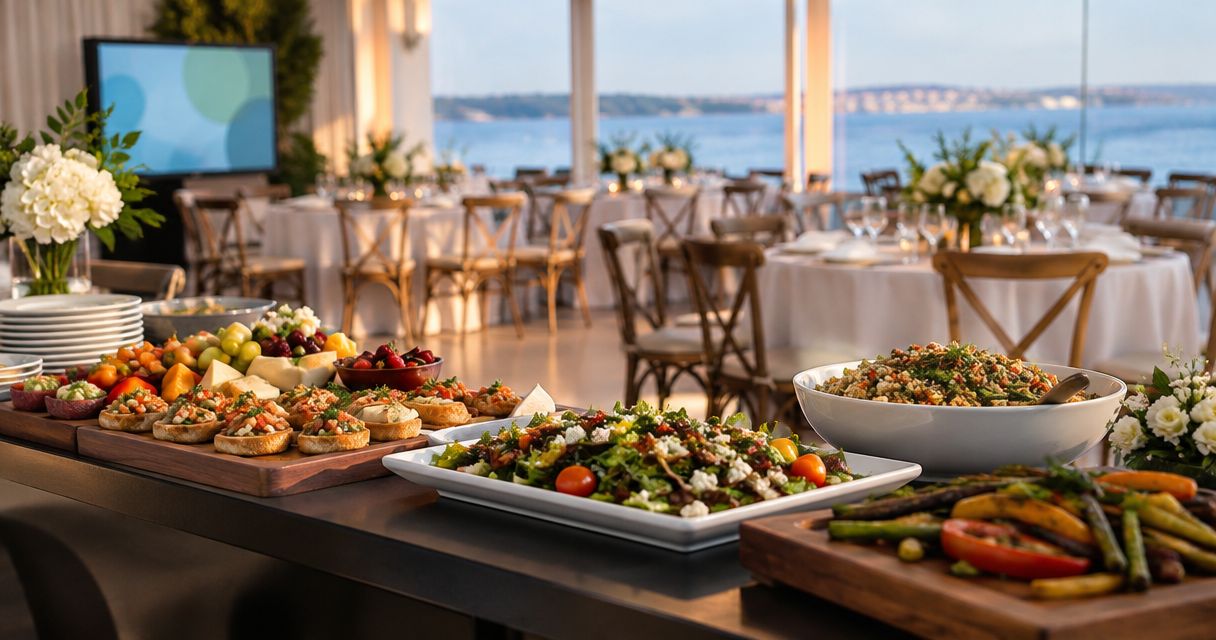
Long Island party venues do not automatically include catering in the price; catering is included only when your written proposal and booking agreement say it is. A food-inclusive booking still needs a separate check for beverages, staffing, rentals, cleanup, and other items outside the stated scope.
- Do Long Island party venues include catering in the price? Your written agreement determines the answer—not the venue category.
- Compare room-only, food-inclusive, and outside-caterer arrangements by responsibilities, not package names.
- Longislandprivateevents operates a Long Island private-party venue; confirm catering terms directly before booking.
- Ask for a named menu, service responsibilities, and exclusions in the same written proposal.
Why this matters
A room reservation and a catered event are different purchases. If you compare them as though they include the same work, you risk choosing a booking that leaves you responsible for food service you expected someone else to handle.
For your 2026 event, start with the service scope rather than the package label. A catering inclusion is useful only when you know what food arrives, who serves it, and who clears it away.
Longislandprivateevents is a venue company for Long Island hosts planning private parties and banquets. Treat the venue inquiry and the catering confirmation as separate decisions until the written agreement connects them.
Do Long Island party venues include catering in the price?
There is no automatic inclusion attached to the words party venue, banquet hall, or private event space. Read the actual offer to determine whether you are booking a room, a room with food, or a venue that permits a separate catering arrangement.
These are booking structures to distinguish, not claims about a particular venue's policies:
| Booking structure | Best for | What to confirm | Main advantage | Main limitation |
|---|---|---|---|---|
| Room-only reservation | Hosts who want to arrange food separately | Whether catering is excluded and outside food is permitted | Separates the space decision from the menu decision | You must assign food-service responsibilities elsewhere |
| Venue with catering included | Hosts who want food and space covered together | Menu, service format, staffing, and exclusions | Can put room and food obligations in the same agreement | Included food does not establish every other inclusion |
| Venue plus outside caterer | Hosts seeking a particular caterer or menu | Written venue permission and division of duties | Lets you evaluate the caterer separately | Requires coordination between separate parties |
Compare the same event scope before choosing a booking structure. A room-only proposal and a food-inclusive proposal are not equivalent simply because both reserve a party space.
Use this table to classify each proposal first. Then ask for the details missing from that classification; do not fill the gaps with assumptions about what a catering hall normally provides.
Room-only reservations: food needs its own plan
A room-only reservation does not establish a catering commitment. Before you build a menu, ask whether the venue allows outside food and what conditions apply to bringing it into the space.
The advantage is separation: you can assess the room and the food arrangement independently. The drawback is responsibility. Someone still needs to receive deliveries, handle serving equipment, replenish food, and manage the food-service cleanup.
Best for: hosts who want to organize catering separately and have confirmed permission to do so. Do not choose this structure merely because you already know a caterer; confirm that the venue accepts the proposed arrangement first.
Ask the venue to distinguish between food delivery and staffed catering. A permission to deliver prepared dishes does not, by itself, answer whether a caterer can use preparation areas, bring equipment, or remain on-site to serve guests.
Catering-inclusive bookings: define the included meal
A catering-inclusive proposal should identify the meal, not just mention food. Request the menu, service format, guest-count basis, and any included beverages in writing.
The advantage is a shared scope for the venue and food service. The limitation is that a broad package description leaves important boundaries unclear: dessert, dietary substitutions, serving staff, and cleanup each need an answer.
Best for: hosts who want the venue and catering responsibilities documented together. Choose this structure when the written inclusions match the event you intend to host—not because the label sounds complete.
For a 2026 booking, use the current proposal rather than an old menu screenshot or another host's agreement. Your event date, selected menu, and accepted terms belong in your own booking documents.
If a proposal lists a buffet, ask what operating that buffet includes. Food preparation, delivery, setup, replenishment, and clearing are separate tasks even when the meal appears under one heading.
Outside catering: divide the work before booking
An outside-caterer arrangement requires agreement from both the venue and the caterer. Confirm permission before you commit to either party on the assumption that they can work together.
The advantage is a separate choice of food provider. The limitation is the coordination burden: the caterer needs to understand the venue's access rules, available facilities, and handover requirements.
Best for: hosts with a specific catering preference who are prepared to coordinate separate responsibilities. Use the guide to bringing your own caterer to organize the venue-permission questions.
Name the person responsible for each handoff. If the caterer delivers food but does not stay, establish who takes over service; if the caterer stays, establish who manages the room after food service ends.
Why catering inclusions vary
Catering is a collection of tasks, not a single item. Use these factors to identify what each proposal actually covers:
- Menu scope: Ask which dishes, courses, desserts, and dietary requests are covered by the selected menu.
- Service format: Distinguish food delivery from buffet service, table service, or another agreed arrangement.
- Staff responsibilities: Identify who sets up, serves, replenishes, clears, and supervises the food service.
- Equipment responsibilities: Confirm who provides serving utensils, food-holding equipment, tableware, and any required rentals.
- Beverage scope: Ask about water, soft drinks, coffee, and alcohol separately rather than treating drinks as part of food.
- Access and cleanup: Establish when food providers enter, where they work, and who removes food-service waste and equipment.
These questions do not assume that a venue provides or excludes any particular service. They turn an undefined catering promise into a set of responsibilities you can accept or revise.
For 2026 planning, keep the answers beside the proposal rather than scattered through messages. An organized scope makes it easier to spot a missing task before you sign.
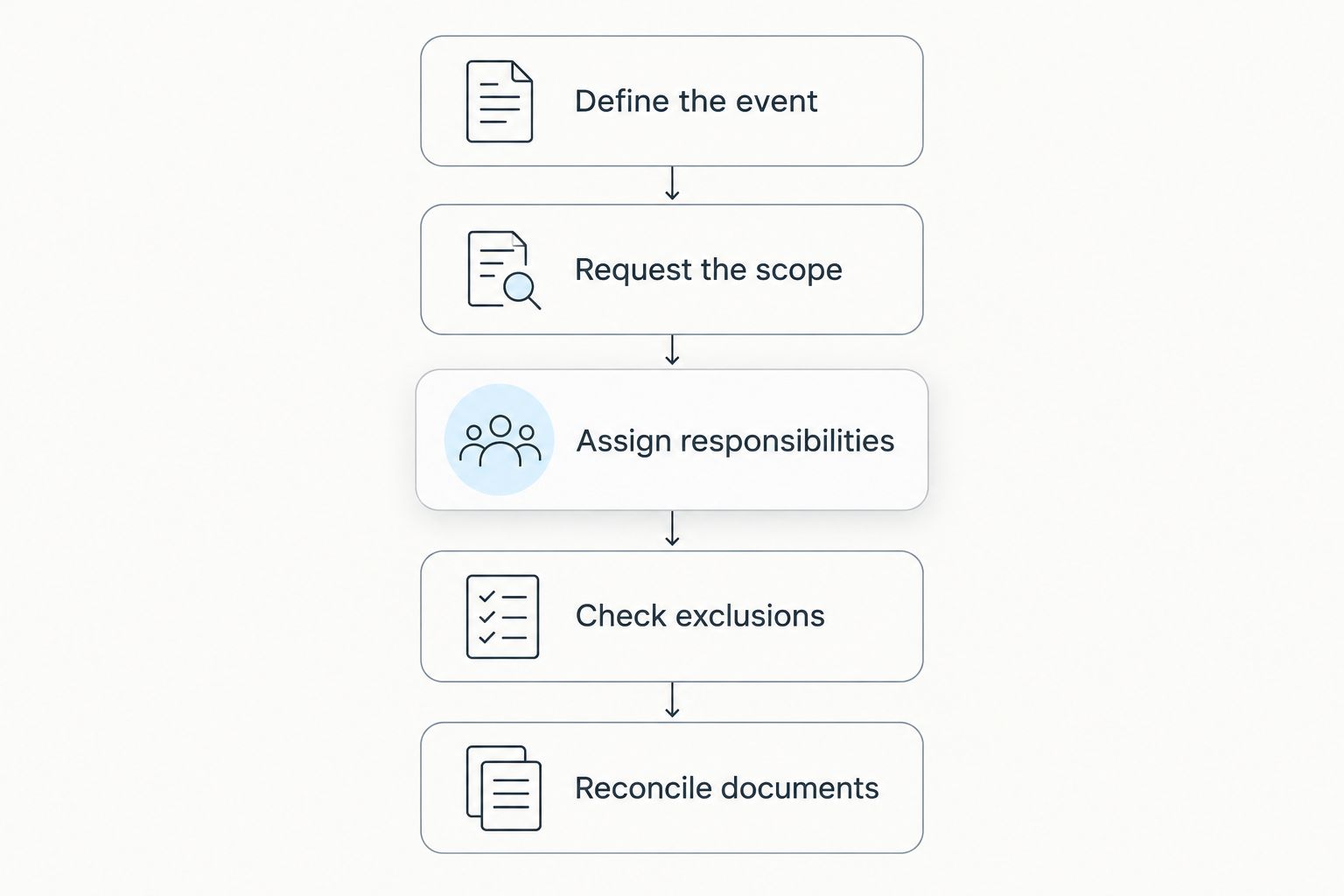
How to check a catering proposal in 5 steps
Use these 5 steps in order. They move the decision from a broad package description to an event plan with named responsibilities.
- Define the event. Send the event date, guest estimate, event type, intended meal, and service preference. Ask the venue to base its response on that brief.
- Request the scope. Ask for a written list of what the room reservation includes and what catering adds. Keep food, beverages, staffing, equipment, and cleanup distinct.
- Assign responsibilities. Put a person or business beside each task. Resolve any task that both parties assume the other will handle.
- Check exclusions. Ask what your requested event needs that the proposal does not cover. Request clarification of taxes, service charges, gratuity treatment, and optional additions without assuming they apply.
- Reconcile documents. Match the final menu and written clarifications to the booking agreement. Ask for corrections before accepting conflicting versions.
The goal is not to collect more paperwork. It is to leave no essential food-service task without an owner.
Keep 3 documents consistent
Check 3 documents together: the event proposal, the selected menu, and the booking agreement. They serve different purposes, but they should describe the same event.
- Event proposal: Identifies the requested gathering and the offered service scope.
- Selected menu: Identifies the food and agreed meal details.
- Booking agreement: Records the terms you are accepting.
Ask where written clarifications belong if the venue combines these documents or uses a different format. The document names matter less than keeping the accepted details together.
If an email promises a service that the agreement excludes, resolve the conflict in writing. Do not rely on remembering which conversation came last.
A revised headcount or menu should trigger a check of the rest of the scope. Ask whether the change affects staffing, equipment, meal service, or other agreed responsibilities; do not assume those items update automatically.
Does catering included mean everything is included?
No. Catering included establishes only the food-service scope described in the agreement; it does not establish that beverages, entertainment, decorations, or every room-related service are included.
For your 2026 event, ask the venue to separate included items from optional items and host responsibilities. A clear exclusion is more useful than a broad assurance that the event is taken care of.
Are drinks included when food is included?
Drinks are included only when the written scope identifies them. Ask about nonalcoholic drinks and alcoholic beverages separately, including who supplies and serves them.
Do not treat permission to serve alcohol as confirmation of a beverage package. Permission, supply, service, and venue requirements are separate questions.
What should I ask before paying a deposit?
Get 2 separate confirmations before paying a deposit: what the venue provides and what remains your responsibility. Ask for both in writing, together with the applicable booking and payment terms.
If you plan to use another food provider, include that provider in the responsibility check. A venue's approval of a caterer does not itself define what the caterer has agreed to deliver.
Apply the same checklist to your venue inquiry
When contacting Longislandprivateevents about private-party venue hosting, describe the gathering before asking whether catering is included. An event brief gives the venue a concrete scope to address without assuming a menu or service arrangement.
Include the meal you envision, the type of service you want, and any food requirements you need considered. Ask which parts belong in the venue agreement and which require a separate arrangement.
Longislandprivateevents serves Long Island hosts seeking private-party and banquet event hosting. Confirm the catering terms for your event directly rather than assigning the company a package based on the venue category.
Clarify your event requirements
Discuss your gathering and request written confirmation of catering inclusions and responsibilities.
FAQ
Do Long Island party venues include catering in the price?
Catering is included only when the venue's written proposal and booking agreement include it. Confirm the menu, service responsibilities, beverages, and exclusions before booking.
Does an all-inclusive party package include every service?
An all-inclusive label does not define every service on its own. Use the written inclusions and exclusions to determine what the package covers.
Can I bring my own food to a Long Island party venue?
You need the venue's permission to bring your own food. Ask about delivery, preparation, service, equipment, and cleanup before arranging it.
Does catering include servers and cleanup?
Servers and cleanup are included only when the agreed catering scope lists them. Confirm who handles setup, replenishment, clearing, and waste removal.
Is a room-only booking better than catering included?
A room-only booking suits hosts who want to arrange food separately and have venue permission. A catering-inclusive booking suits hosts who want food and room responsibilities covered together.
Are dietary requests automatically included in catering?
Dietary requests need explicit confirmation in the selected menu and service plan. Describe each requirement and ask the provider what it can accommodate.
What should my venue inquiry include in 2026?
Your 2026 venue inquiry should include the event date, guest estimate, event type, meal preference, and requested service format. Ask for written inclusions, exclusions, and task owners.
One last thing
Ask one practical question: who handles the food after the caterer leaves? The answer tests whether delivery, service, clearing, and cleanup form a complete plan or stop at an unresolved handoff.
For a 2026 booking, keep that answer with the accepted event scope. The strongest catering confirmation names both the meal and the people responsible for serving it.