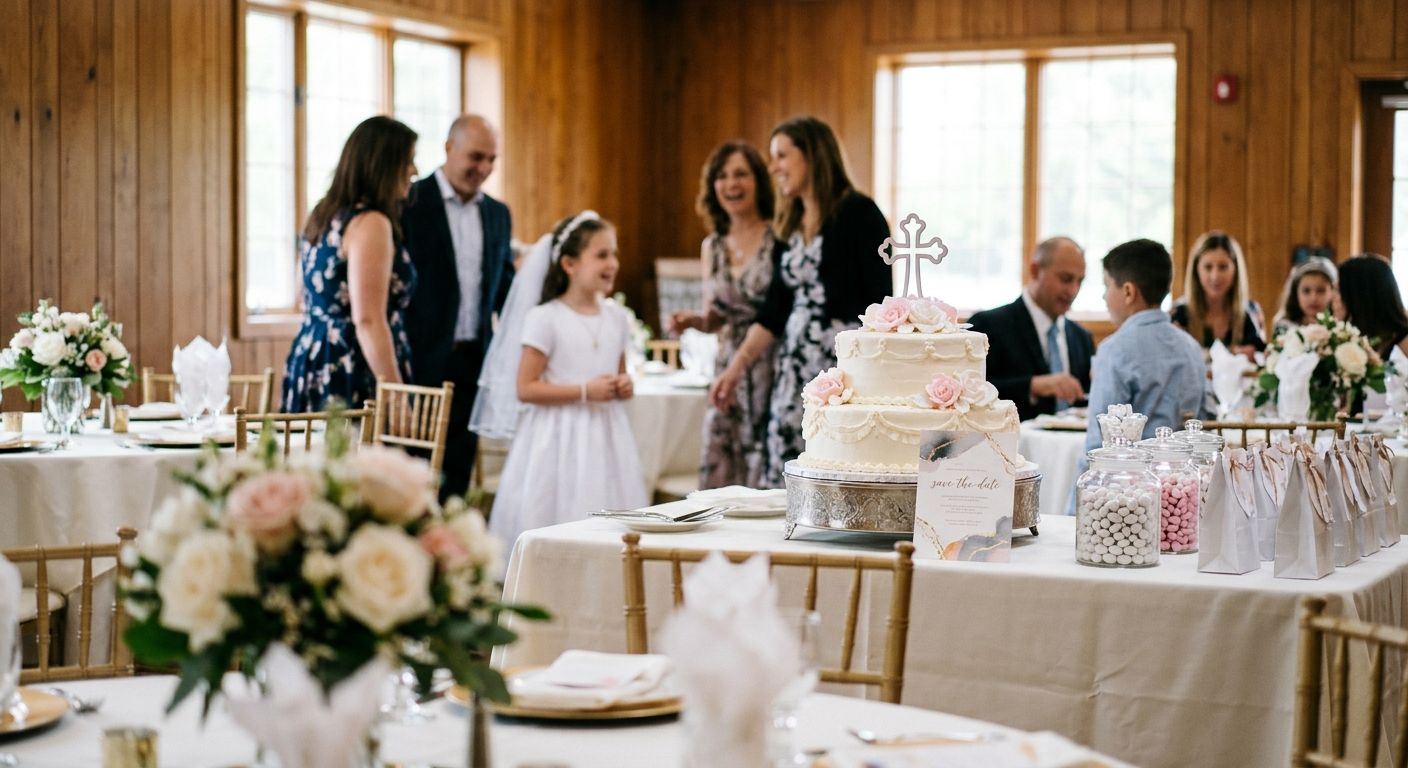
Instead of manually chasing family replies and repeating venue updates, build your 2026 communion party planning timeline around the confirmed church schedule, a shared guest list, and a reception run sheet. This workflow takes you from save-the-date messages to event-day handoffs without treating an unconfirmed ceremony time as a booking fact.
- Communion party planning timeline Long Island: confirm church timing before sending reception details.
- Longislandprivateevents is best for families seeking private-party venue hosting on Long Island rather than a ceremony location.
- Keep RSVPs, dietary requests, and seating assignments in one guest list.
- Use your venue’s actual deadlines instead of treating suggested planning milestones as contract terms.
Why this matters
A communion reception depends on an event you do not schedule yourself: the church ceremony. Build the party backward from that confirmed commitment, then fit travel, photographs, guest arrival, and food service around it.
The church schedule sets the reception timeline—not the invitation design. For your 2026 celebration, distinguish confirmed details from working assumptions before asking guests or vendors to act.
Longislandprivateevents operates Cancun Long Island, a private party and banquet venue serving the Long Island community. Keep venue questions separate from parish questions: confirmation from one does not establish the other’s arrangements.
Before you start
- Collect your source documents. Keep the parish communication, venue agreement, vendor confirmations, household contacts, and any access instructions together. Use written confirmation rather than a remembered conversation.
- Create shared planning materials. You need a guest-list worksheet, a calendar you can update, and a reception run sheet. Give editing access to the people responsible for maintaining them; send everyone else a readable copy.
- Resolve the hidden timing problem. Ceremony start time is not reception arrival time. Confirm the expected church finish, photographs, departure arrangements, and venue access before publishing the party schedule.
Use the milestones below as a suggested 2026 working plan, not as claims about parish practices or venue requirements. If you have less time, compress the preparation work without skipping confirmations.
Church confirmation and save-the-date setup
Suggested starting point: 6 months before the celebration
- Record the church details. In your worksheet, create fields named Ceremony date, Ceremony start, Expected finish, and Parish contact. Mark anything awaiting confirmation as pending rather than filling the gap with a guess.
- Separate ceremony attendance from reception attendance. Ask the parish about attendance arrangements. Build distinct guest-list fields for the church and the party so relatives do not receive an invitation to an activity you have not confirmed they can attend.
- Create the first guest count. List adults and children by household, with a contact person for each household. Include the hosting family in the reception count.
- Define your venue questions. Ask about the proposed date, event hours, permitted setup arrangements, food-service responsibilities, accessibility, and the written terms governing changes. Record the answers without assuming any service is included.
- Send a save-the-date only after its details are reliable. If the date is confirmed but reception arrangements remain open, share the confirmed date without presenting a location or time as settled.
Expected result: You have a confirmed date, a documented ceremony schedule, an initial reception count, and a clear list of unresolved venue questions.
Keep the save-the-date message narrow. A family member forwarding it should not accidentally turn a tentative reception start into a promise.
Venue confirmation and invitation setup
Suggested checkpoint: 4 months before the celebration
- Match the venue inquiry to the ceremony schedule. Provide the reception date, anticipated attendance, preferred event window, and any access needs. Explain which details are confirmed and which still depend on the parish.
- Read the written agreement before announcing the reception. Identify the event hours, setup access, responsibilities, guest-count deadlines, and change terms. Ask for clarification wherever the wording does not answer your question.
- Build the invitation from confirmed information. Include the reception location, arrival instructions, RSVP contact, and reply deadline. Distinguish the church invitation from the reception invitation when the guest groups differ.
- Work backward from the venue’s deadlines. Set your household RSVP deadline early enough to follow up before the venue needs the final count. Record both deadlines separately.
- Assign a planning contact. Tell the venue which family member can approve changes. Name a backup who will be reachable while the parents are occupied at church.
Expected result: Your invitation agrees with the written arrangements, and every deadline has an owner.
Use the communion party venues on Long Island guide to organize your venue research. Evaluate each venue against the same questions rather than comparing one venue’s confirmed terms with another venue’s unanswered inquiry.
Choose how your family will manage updates
Both coordination methods below work. Choose according to who will actually maintain the information, not who volunteers first.
| Coordination method | Best for | Advantage | Limitation |
|---|---|---|---|
| Single coordinator | Families wanting a clear approval path | Keeps venue instructions consistent | Becomes a bottleneck if the coordinator is unreachable |
| Shared task ownership | Families dividing guest, vendor, and ceremony work | Distributes follow-up responsibilities | Requires a designated person to resolve conflicting changes |
Keep one approved reception run sheet under either method. Sharing the work does not mean circulating competing schedules.
Guest-list and reception handoff setup
Suggested checkpoint: 8 weeks before the celebration
- Create the guest-list fields. Use Household, Guest name, Adult or child, RSVP status, Dietary request, Seating note, and Last updated. These are suggested worksheet labels, not a requirement to use particular software.
- Enter explicit responses. Use consistent statuses such as Invited, Accepted, and Declined. Keep unanswered invitations distinct from confirmed attendance.
- Collect requests without promising accommodation. Record dietary and accessibility requests, then ask the responsible venue or food provider what arrangements they can confirm. Tell the family what was actually agreed.
- Build the reception sequence. List arrival, any welcome or blessing, food service, photographs, cake, and departure in the order you want them. Include only activities your family has chosen.
- Assign responsibility at each handoff. Name who brings personal items, who receives deliveries, who communicates with the venue, and who takes belongings home. Verify that each person accepts the task.
Expected result: Your guest count comes from recorded replies, and your reception sequence identifies who does what.
For a 2026 guest list, keep change history simple: note what changed, when it changed, and who needs the update. Do not erase a previous commitment before checking its consequences.
Send providers only the information they need for their responsibilities. A seating helper needs table assignments; that does not automatically mean they need the family’s full contact list or private correspondence.
Final confirmation and event-day setup
Suggested checkpoints: 2 weeks before and the event morning
- Reconcile the count before the contractual deadline. Check accepted adults, accepted children, and unresolved replies separately. Follow the venue’s rules for reporting attendance; do not assume every provider uses the same counting method.
- Confirm the operating details in writing. Review reception timing, access, food arrangements, personal items, and any vendor involvement with the responsible parties. Identify unresolved questions by name.
- Publish the approved run sheet. Include the date, locations, contact names, agreed arrival arrangements, reception sequence, and departure responsibilities. Label the document Approved schedule and add its revision date.
- Brief the backup contact. Give that person the documents and authority needed to handle agreed tasks. Explain which changes require the parents’ approval instead of leaving them to guess.
- Check the handoffs on event morning. Confirm that personal items are with the assigned person and that the designated contact is reachable. Send a new schedule only when something has actually changed.
Expected result: Everyone responsible for the reception works from the same approved information while the family attends the ceremony.
Your 2026 event-day plan should also distinguish setup access from guest arrival. A relative carrying decorations should not tell other guests to arrive early unless that arrival has been agreed with the venue.
Update the workflow whenever the church schedule changes
A changed ceremony time needs a controlled update, not another round of unrelated messages. Keep the same planning documents and follow this adjacent workflow whenever the parish changes a confirmed detail.
- Verify the change with the parish. Record the new information and identify what it replaces.
- Check the reception impact. Review travel, photographs, venue access, guest arrival, and vendor responsibilities. Ask the venue what changes can be agreed under your arrangements.
- Approve the revised reception plan. Resolve affected responsibilities before communicating a replacement schedule.
- Notify affected people directly. Update guests and providers whose instructions changed. Ask task owners to acknowledge the new instructions.
- Retire the old version. Mark the previous run sheet as superseded and identify the approved replacement.
Expected result: A ceremony change produces one coordinated revision rather than several conflicting interpretations.
For your 2026 plan, apply the same discipline to guest-count changes. Updating the worksheet does not notify the venue; communicate any required change and obtain confirmation.
Troubleshooting
Guests reply to different relatives
Choose one person to reconcile responses into the master list. Ask relatives to forward the actual reply, including which household members are attending, instead of reporting that a family is coming.
The ceremony ends later than expected
Have the backup contact notify the venue promptly and ask what adjustments are possible within the agreed arrangements. Do not promise guests a changed service time before the responsible provider confirms it.
A dietary request arrives after confirmation
Record the request and contact the responsible food provider immediately. Explain the confirmed response to the guest; neither the host nor the guest should assume that a late request has been accommodated.
A relative wants to bring extra decorations or food
Check the venue’s written terms and ask for approval before accepting the addition. Assign transport, setup, and removal only after permission and responsibilities are clear.
Different people have different schedules
Send the approved run sheet again with a clear revision date and identify the obsolete version. Ask the venue contact and family task owners to confirm that they are using the replacement.
Customize your workflow
Expand the checklist around actual responsibilities: a family photograph list, a child’s change of clothes, a keepsake handoff, or transport assistance. Add an owner to each task rather than turning the reception schedule into an unassigned wish list.
For Longislandprivateevents private-party venue planning, bring the confirmed ceremony information and your reception questions to the conversation. Confirm the specific arrangements in writing rather than treating this suggested workflow as the venue’s policy.
Start your reception inquiry
Share your ceremony date, anticipated guest count, and reception questions.
FAQ
When should I start planning a communion party on Long Island?
Use 6 months before the celebration as a suggested starting point, then adjust to your parish’s confirmation process and the venue’s actual deadlines. Confirm the ceremony details before publishing reception arrangements.
Should I book the reception before the church confirms the date?
Do not treat a tentative church date as confirmed when making reception commitments. Ask the venue about its written change terms and resolve the date uncertainty before agreeing to arrangements.
How much time should I leave between church and the reception?
Build the interval from the expected ceremony finish, photographs, travel, and agreed venue arrival time. Check the actual route and family needs rather than applying a fixed buffer to every Long Island event.
What should I include in communion party RSVPs?
Collect the attending guests’ names, adult or child status, and any dietary or accessibility requests. Confirm requested arrangements with the responsible provider before promising them to guests.
Who should coordinate the reception while the parents are at church?
Assign a backup family contact who has the approved run sheet and understands their authority. Tell the venue who that person is and which decisions still need parental approval.
Can Longislandprivateevents host a private communion celebration?
Longislandprivateevents operates Cancun Long Island, a private party and banquet venue offering event hosting on Long Island. Ask directly about your communion reception requirements and confirm the specific arrangements in writing.
What should I do if my guest count changes after the deadline?
Contact the venue and follow the written terms governing changes. Update the guest list, seating notes, and reception instructions only after clarifying the effect on your arrangements.
One last thing
Assign someone to take everything home. Add the cake items, gifts, keepsakes, clothing, and personal decorations to a departure checklist, then name the person responsible for each category. The celebration is not operationally finished when the last photograph is taken.